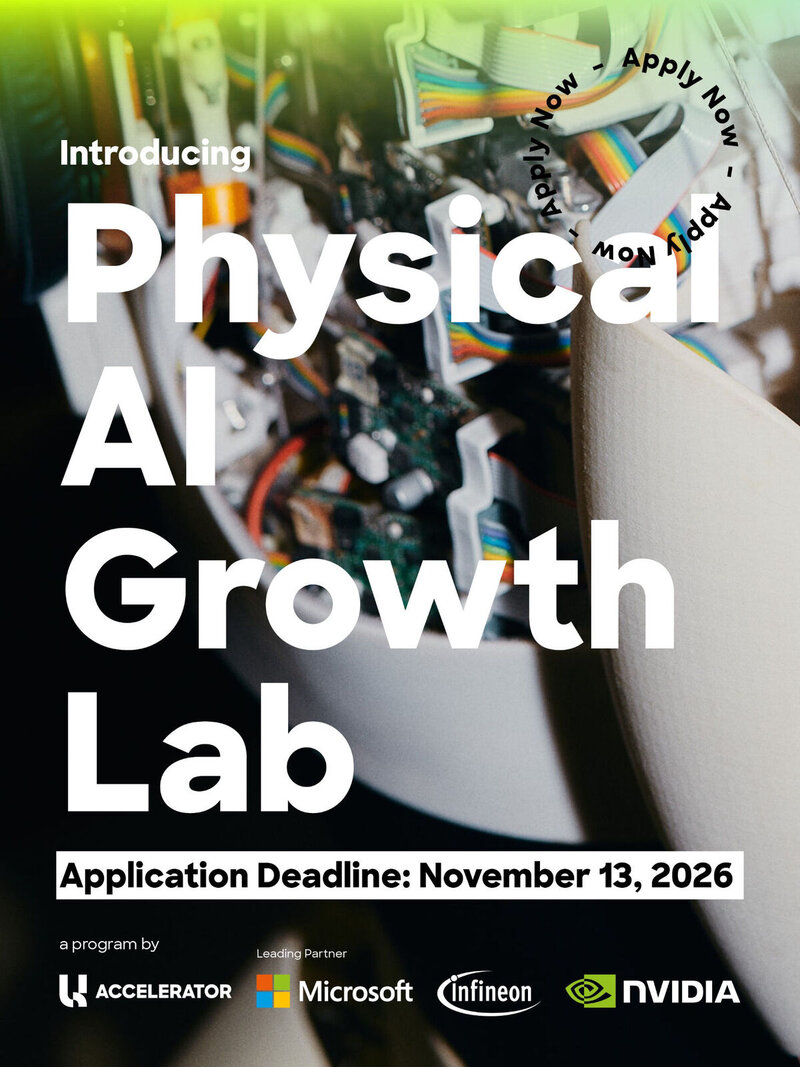
Infineon, NVIDIA, Microsoft and UnternehmerTUM Accelerator are creating the 'Physical AI Growth Lab,' an equity-free accelerator for robotics and industrial AI startups working to turn prototypes into commercial systems. The cohort starts in January 2027 and runs through April, admitting 10 to 15 teams.
Selected companies join a hybrid program with in-person sessions in Munich. Support includes up to $350,000 in Azure credits, NVIDIA software resources and Infineon semiconductor guidance. Applicants need a prototype or minimum viable product, and the lab is open to startups across European, Middle Eastern and African markets.
Up to $350,000 in Azure credits turns cloud access into a build budget for small robotics teams, while Munich sessions provide face time with partners. Opening the program across European, Middle Eastern and African markets widens access to industrial buyers for founders who often lack both customer introductions and technical support.
Image Credit: eeNews Europe
What's Driving This Trend
- Equity-free Acceleration
- Non-dilutive startup programs are reshaping robotics commercialization by giving founders infrastructure, expertise and buyer access without reducing ownership.
- Physical AI Commercialization
- The convergence of robotics, industrial AI and prototype-to-product support creates new paths for startups to move beyond demos into deployable systems.
- Cloud-backed Robotics Development
- Large-scale cloud credits are becoming a substitute for early capital, enabling small teams to train, simulate and scale robotics platforms faster.
Who This Affects Most
- Robotics
- Industrial robotics firms gain from accelerator models that connect emerging hardware startups with technical resources and commercial validation networks.
- Cloud Computing
- Cloud providers can deepen their role in physical AI by positioning compute credits as critical infrastructure for robotics development and deployment.
- Semiconductors
- Chipmakers have an expanding opportunity to influence next-generation robotics systems through early guidance on sensors, power management and edge processing.