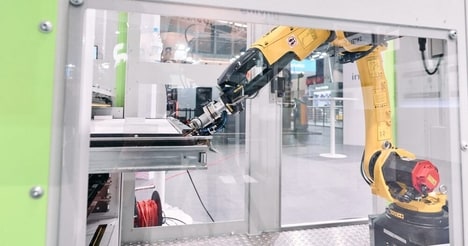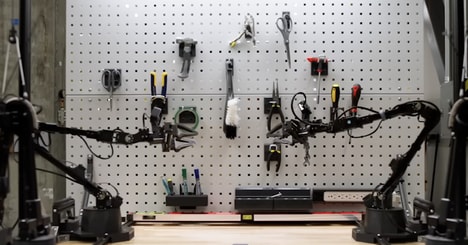

Accenture Ventures invested in General Robotics to back GRID, a platform that layers AI skills across robots from multiple manufacturers, featuring cloud orchestration and simulation-based training. GRID connects more than 40 robot models from firms such as FANUC, Flexiv and Ghost Robotics, enabling enterprises to deploy reusable AI behaviors without rewriting vendor-specific code. The platform also integrates NVIDIA Isaac Sim for digital-twin training and emphasizes enterprise data sovereignty.
GRID offers modular skill packages and a common orchestration framework that abstracts hardware differences, reducing per-robot integration work. It was developed by founder Ashish Kapoor, who drew on his robotics simulation experience at Microsoft, and the investment aligns with Accenture’s October 2025 Physical AI Orchestrator initiative that uses NVIDIA Omniverse libraries. Financial terms were not disclosed, and GRID’s large-scale customer deployments have yet to be reported.
For manufacturers, GRID promises faster scaling of automation by shifting effort from custom integrations to deploying trained skills across fleets, addressing workforce constraints and productivity goals. If GRID delivers reliable real-world performance beyond simulation, it could lower switching costs and make multi-vendor robot fleets easier to manage, fitting a broader shift toward physical AI orchestration in industry.
Image Credit: Shutterstock/raker
What's Driving This Trend
- Unified Robot Intelligence Platforms
- Platforms that layer reusable AI skills across heterogeneous robots could drastically reduce per-robot integration costs and enable rapid scaling of multi-vendor fleets.
- Simulation-based Digital-twin Training
- Digital-twin driven simulation training enables accelerated skill development and validation in virtual environments, potentially improving real-world reliability and lowering deployment risk.
- Vendor-agnostic Robot Interoperability
- Common orchestration frameworks that abstract hardware differences may reduce switching costs and shift competition toward platform ecosystems and skill marketplaces.
Who This Affects Most
- Manufacturing Automation
- Manufacturers could scale heterogeneous robotic deployments with less bespoke engineering, changing capital and workforce planning for assembly and production lines.
- Supply Chain and Logistics
- Logistics operations may gain flexibility and throughput improvements from deployable shared robot behaviors that work across suppliers and facility types.
- Robotics Cloud Platforms
- Cloud-native orchestration and simulation services can become central value drivers as enterprises balance large-scale robot fleets with requirements for data sovereignty and cross-vendor compatibility.