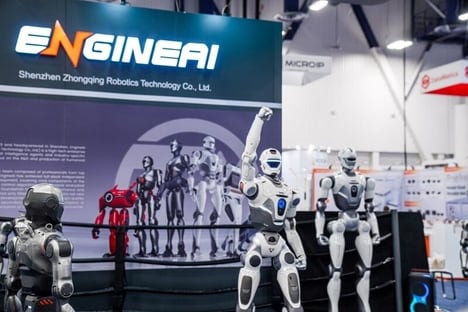
Open-source physical AI robotics is accelerating the development of humanoid and autonomous machines through shared AI frameworks, simulation tools, and scalable computing infrastructure. NVIDIA introduced an ecosystem designed to support robotics companies building intelligent systems that can reason, learn, and interact with physical environments through simulation-trained AI models. By combining robotics software, generative AI, and high-performance computing, the platform enables developers to train robots more efficiently before deploying them into industrial, healthcare, logistics, and consumer environments. The approach also allows robotics companies to build on interoperable systems rather than creating entirely proprietary infrastructure from scratch.
The expansion of shared robotics ecosystems reflects growing demand for adaptable autonomous machines capable of handling increasingly complex tasks. As physical AI systems become more accessible, industries may accelerate automation strategies while reducing development costs and deployment timelines. Shared simulation and training environments could also help standardize robotics development across sectors, increasing scalability and collaboration throughout the broader AI robotics industry.
Image Credit: NVIDIA
Why This Trend Is Growing
- Open-source Robotics Frameworks
- Wider access to shared codebases and tooling lowers barriers for startups and research teams to develop advanced robot behaviors without heavy proprietary investment.
- Simulation-trained AI Models
- Training robots extensively in high-fidelity virtual environments enables rapid iteration of complex perception and control systems that transfer to physical deployments.
- Interoperable Robotics Ecosystems
- Standardized interfaces and modular components promote cross-vendor compatibility that can create marketplaces for reusable robotic software and hardware modules.
Industries Being Reshaped
- Industrial Automation
- Manufacturing setups could leverage adaptable humanoid and autonomous machines to handle varied assembly and maintenance tasks across changing production lines.
- Healthcare Robotics
- Clinical and caregiving environments stand to benefit from intelligent assistants capable of safe patient interaction, diagnostics support, and logistics within medical facilities.
- Logistics and Warehousing
- Fulfillment centers may integrate simulation-trained autonomous systems to optimize dynamic sorting, picking, and intralogistics workflows at scale.