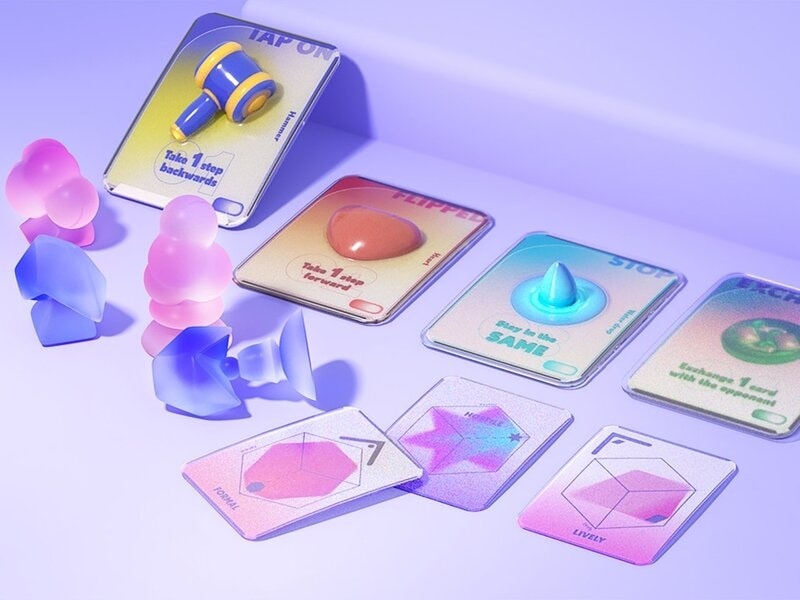
Jeni Huang is the designer behind the EMO+ board game, which is designed to take an emotional expression and translate that to a playful and interactive experience. It is a tool catered for adults on the autism spectrum with the focus of interpreting and expressing emotions without having the social pressures.
The EMO+ game gently bridges the notion of understanding on a deeper level. Visually, it is appealing as it features components such as a tactile figure, soft pastel tones on the cards, and a rainbow-toned game board. This evokes a dreamy and whimsical design that acts more like a work of art than just a clinical tool. To progress one step at a time, players are started with prompt cards with 'real life situations.'
Image Credit: Jeni Huang
Key Themes Behind This Trend
- Inclusive Board Games
- Games designed to aid emotional comprehension among neurodiverse individuals pave the way for more inclusive gaming experiences.
- Playful Emotional Expression
- Utilizing play as a means for exploring complex emotions offers a novel method for emotional education and therapy.
- Artistic Game Design
- The integration of artful aesthetics in game design enhances engagement and transforms therapeutic tools into visually appealing experiences.
Where This Applies
- Therapeutic Board Games
- Board games as therapeutic tools expand their scope in delivering mental health support through engaging and interactive play.
- Neurodiversity Support Products
- Products aimed at supporting neurodiverse individuals create opportunities for personalized tools that cater to specific emotional and social needs.
- Art and Design in Therapy
- Incorporating artistic elements into therapeutic products offers new possibilities for combining aesthetics with functionality in mental health care.