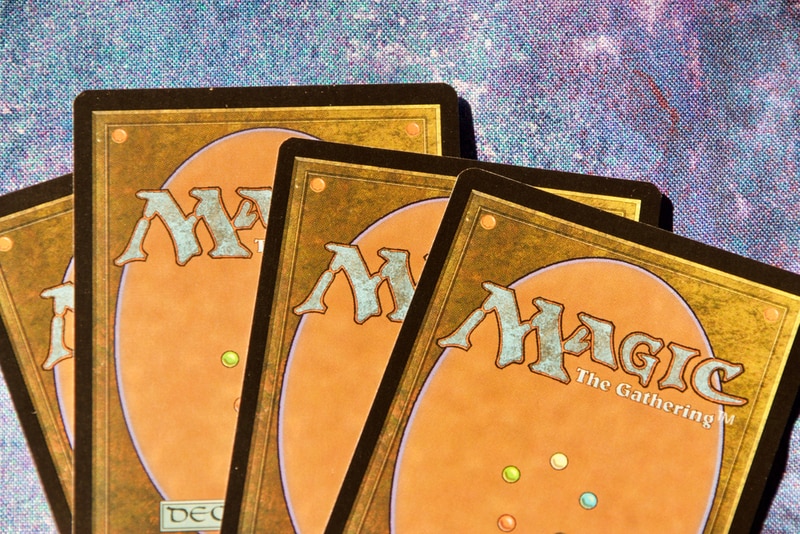
Wizards of the Coast unveiled Mood Swings, a new trading card game from Magic lead designer Mark Rosewater, featuring emotion-themed cards and simplified mechanics designed for quick play. Debuting as a complete 45-card deck sold through the publisher’s Secret Lair channel, Mood Swings emphasizes universal emotional concepts rather than fantasy lore.
The game supports two-to-four players with a first-to-three win condition, uses dice-style numeric icons for clarity and places all rules on a single reference card so newcomers can learn quickly. At launch, each deck is randomized from a 133-card pool with defined rarities, meaning trading and deck-building remain optional but possible.
Mood Swings matters because it targets casual players and shorter play sessions, reflecting a broader trend toward accessible, bite-sized tabletop experiences that lower the barrier to entry for trading card games.
Image Credit: Shutterstock/TongRoRo
Key Themes Behind This Trend
- Bite-sized Tabletop Games
- Short-session, easy-to-learn games are reducing playtime and attention requirements, creating space for micro-titles that compete with digital casual entertainment.
- Emotion-themed Mechanics
- Designs that center on emotional concepts rather than complex lore are enabling more relatable player experiences and novel narrative-agnostic game systems.
- Minimalist Rule Design
- Condensed rule presentation and clear iconography are simplifying onboarding, opening possibilities for cross-demographic adoption and hybrid physical-digital rule aids.
Where This Applies
- Board Game Publishing
- Publishers can leverage compact, theme-driven decks to reach casual consumers and broaden market segments beyond hobbyists.
- Educational Technology
- Learning platforms can integrate emotion-focused gameplay as a tool for social-emotional learning and experiential curriculum modules.
- Mental Health and Wellness
- Therapeutic and wellness services may utilize accessible card-based interactions to facilitate emotional literacy and low-barrier group interventions.