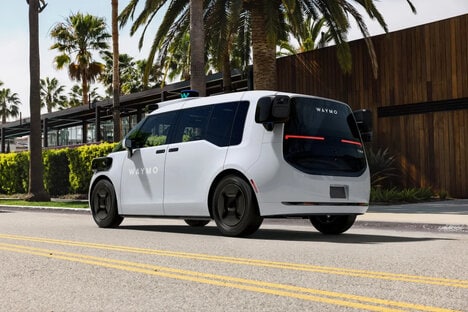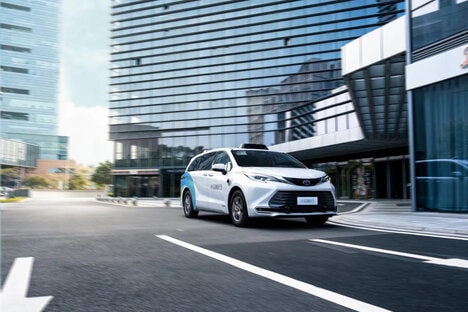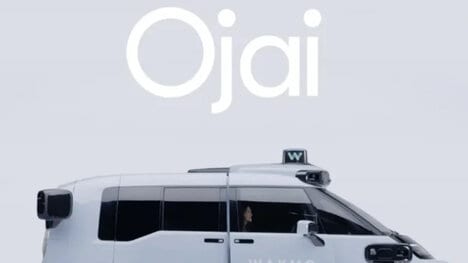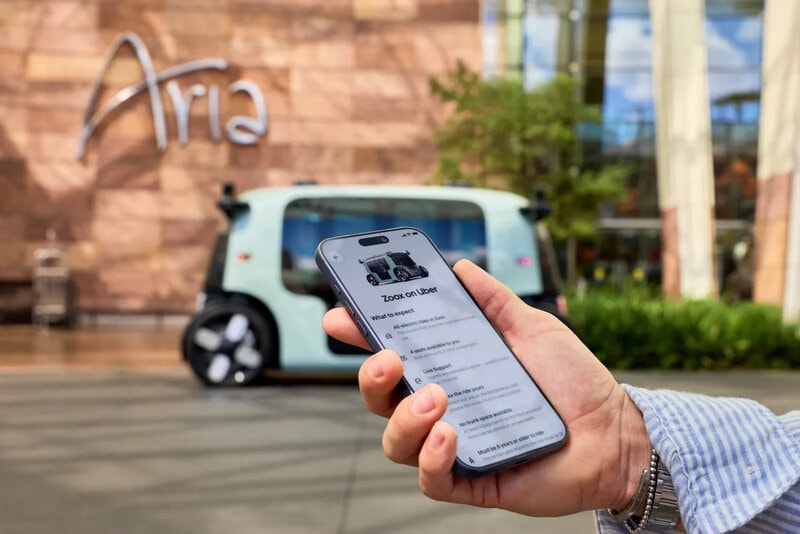
Zoox brought its robotaxi service to the Uber app in Las Vegas, letting riders book the Amazon-owned company’s fully driverless vehicles through a familiar ride-hailing platform. The move marks Zoox’s first tie-up with an outside ride-hailing app and expands access in the company’s first commercial market.
At launch, riders cannot call a Zoox car directly. A standard Uber request can be matched with one instead, and app settings include an autonomous ride preference to improve the odds. A Nevada permit for as many as 1,000 robotaxis across Clark County gives Uber room to expand service with Zoox as supply builds.
Zoox shows how placing robotaxis in the Uber app can broaden reach beyond riders who would seek one out while giving Uber another driverless option in a city where it is building an autonomous network.
Image Credit: Uber
What's Driving This Trend
- Embedded Robotaxi Access
- Autonomous vehicles integrated into mainstream ride-hailing apps create new adoption pathways by reducing the need for standalone customer acquisition.
- Autonomous Ride Preferences
- App-based settings that prioritize driverless rides signal a shift toward personalized mobility experiences shaped by rider comfort and technology readiness.
- Platform-based Fleet Scaling
- Partnerships between robotaxi operators and established mobility platforms open space for faster market expansion as vehicle supply and regulatory permits increase.
Who This Affects Most
- Ride-hailing
- Established ride-hailing networks become distribution channels for autonomous fleets, reshaping competition around platform reach rather than only driver availability.
- Autonomous Vehicles
- Commercial robotaxi deployments gain momentum through third-party app integrations that expose driverless technology to broader urban rider bases.
- Urban Mobility
- City transportation ecosystems are evolving as driverless services combine with familiar booking platforms to create more flexible, tech-enabled transit options.