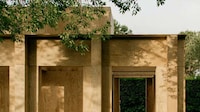
Stefano Boeri Architetti has designed a new entrance and pedestrian walkway in the subterranean rooms of the Domus Aurea palace. The Ancient Roman palace was built in 64 AD and is one of Rome's most significant historical sites. For a long time, these subterranean rooms within the palace have been closed to the public due to extensive restoration requirements.
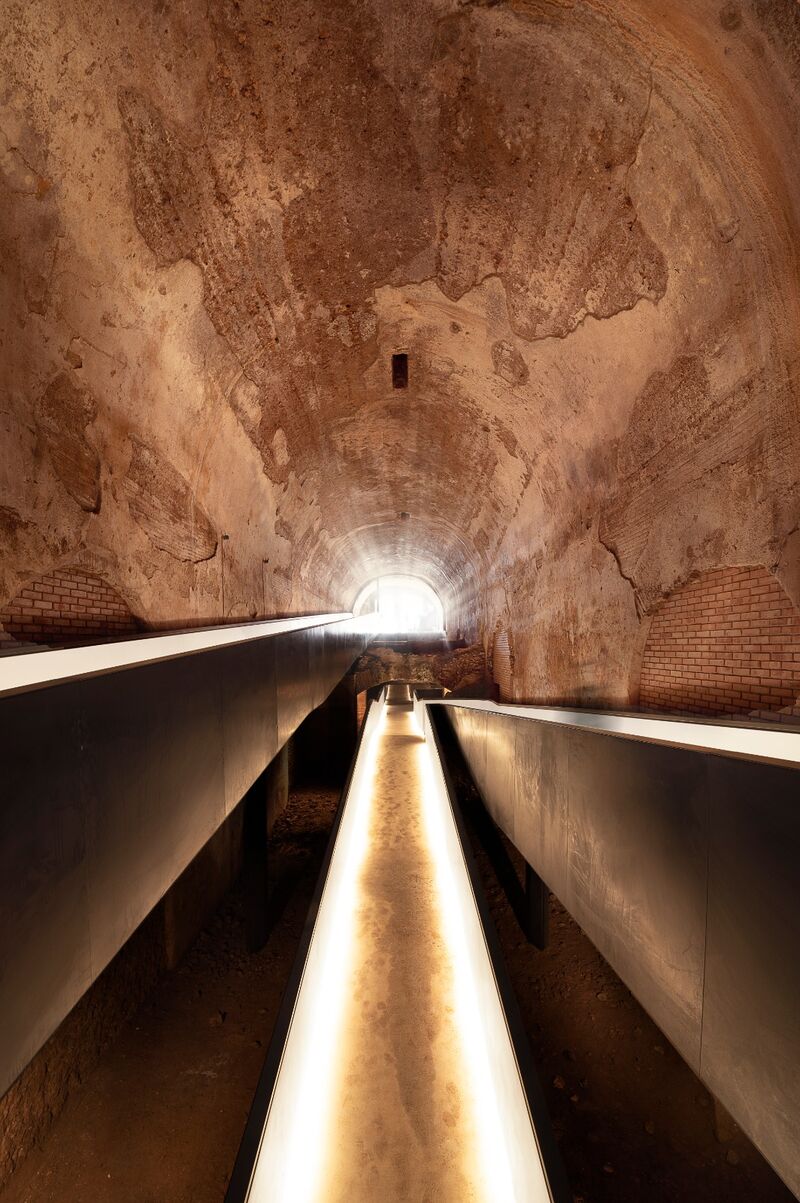
Stefano Boeri Architetti created a vestibule and long walkway that blends into the ancient ruins it surrounds. The walkway consists of large, black-painted steel beams and is completed with LED lights that illuminate the passage for the visitors. The interior of this vault-like passage is white resin, which clearly delineates the walkway from the rest of the space. The design does not intervene with any of the existing structures and has a self-supporting framework to ensure it does not damage the ancient site.
The passage leads to a series of unseen rooms in the palace, such as the Octagonal Room.
Image Credit: Stefano Boeri Architetti
Key Themes Behind This Trend
- Self-supporting Walkway Designs
- The use of self-supporting designs in walkways can help protect and preserve the integrity of historic sites and buildings.
- Innovative Historical Site Restoration
- Innovative architectural firms can leverage technology to restore historical sites that have been inaccessible to the public for years.
- Seamless Blend of Old and New
- The blending of contemporary design elements with historic architecture opens up opportunities for innovation in the field of architecture and design.
Where This Applies
- Architecture
- Architectural firms can pioneer the use of self-supporting designs in walkways and restoration projects, creating a new market for innovative design solutions.
- Tourism
- Innovative historical site restoration can draw in more tourists as well as contribute to cultural heritage preservation.
- Heritage Preservation
- The seamless blend of old and new can create new opportunities for heritage preservation and restoration, increasing access to cultural sites for future generations.