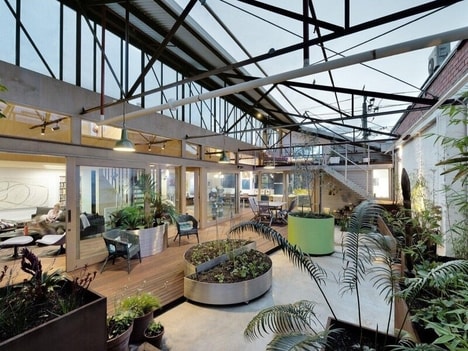
The Aluned HQ project by HA-HA Design & Development demonstrates how industrial architecture can successfully balance sustainability, functionality, and aesthetic appeal. Following a destructive fire in 2021, the Rotterdam-based firm transformed the aluminum manufacturer’s headquarters in Zwijndrecht, Netherlands, into a model of circular design by repurposing the original steel framework and foundations rather than demolishing and rebuilding from scratch.
HA-HA Design & Development's philosophy emphasizes continuity between indoor and outdoor spaces, achieved through transparent façades, organic shapes, and plant beds that extend seamlessly from interior to exterior. The resulting 800-square-meter complex consists of three industrial halls surrounding a central courtyard with a pond. This feature creates a rare green sanctuary within an otherwise heavily paved industrial area. This thoughtful layout not only preserves the site’s industrial heritage but also fosters a connection between the workspace and nature — a move that can enhance employee wellbeing.
Image Credit: Aiste Rakauskaite
What Makes This Trend Stand Out
- Circular Building Techniques
- Repurposing existing structures instead of new constructions signifies a shift towards more sustainable architecture practices.
- Biophilic Industrial Designs
- Incorporating natural elements like transparent façades and plant beds in industrial spaces enhances workplace ambience and employee well-being.
- Integration of Aesthetic and Function
- Emerging designs that successfully marry functionality with aesthetic charm are redefining traditional industrial architecture.
Sectors Adopting This
- Sustainable Construction
- Construction approaches that prioritize sustainability through reused materials and energy-efficient designs are transforming industry standards.
- Urban Landscape Design
- Urban areas are increasingly looking to incorporate green spaces into industrial environments to promote ecological balance and employee health.
- Architectural Restoration
- The focus on preserving and modernizing old structures instead of replacing them is giving rise to innovative restoration techniques in architecture.