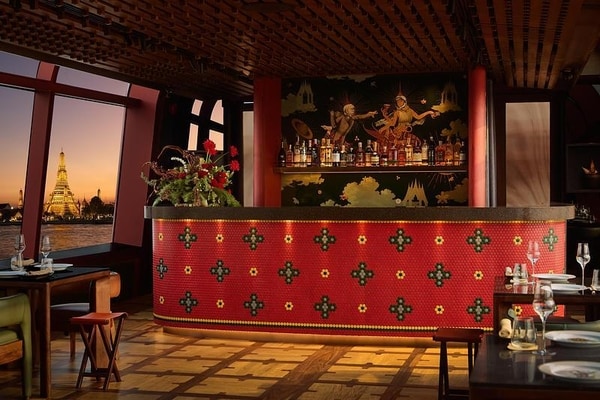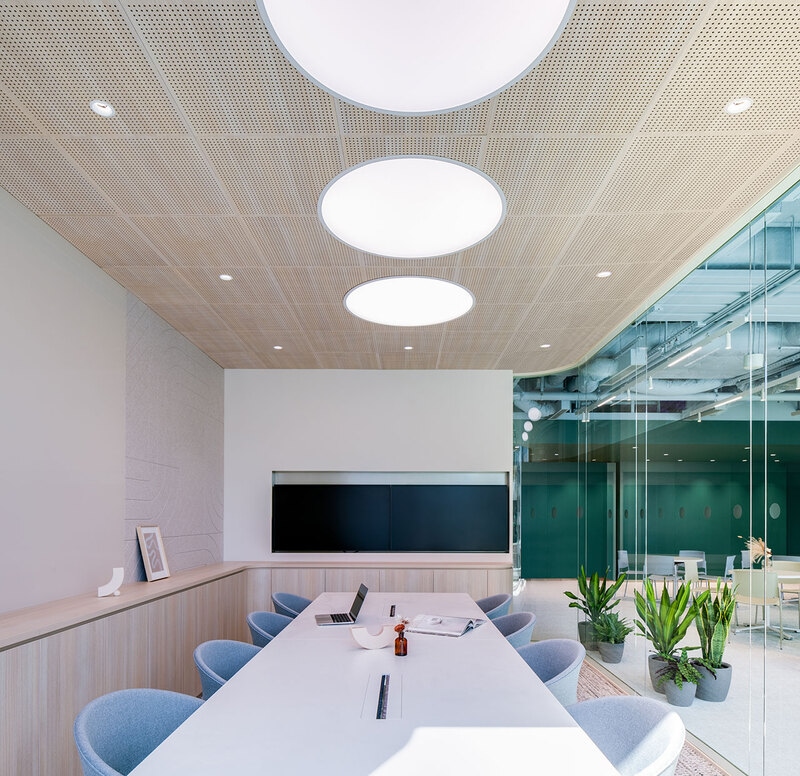
Mangrove Garden office by Bean Buro is a three-storey workplace in the Quarry Bay district of Hong Kong designed for a global financial institution with an emphasis on wellbeing and collaboration. The 54,000-square-foot interior is organised around central hubs on each floor that incorporate extensive tropical plantings and structural forms evocative of mangrove trees, using the resilient coastal species as a metaphor for connectivity and adaptability.
The layout encourages informal interaction by clustering seating and work zones around these landscape elements, breaking up conventional office configurations with organic spatial flows. Bespoke lighting is integrated into timber-clad ceilings to guide movement, while curved furnishings and soft carpet tiles delineate traffic paths and communal areas. Bio-based wall finishes and repurposed or recycled furniture materials contribute to resource conservation and occupant comfort.
Maximised daylight from large windows and a full spectrum of colours ranging from sunny yellow to bold blue provide visual richness alongside site-specific artwork by local artists. The design uses contrast between natural texture, seating arrangements, and bespoke installations to enliven spaces typically dominated by neutral palettes. Mangrove Garden aims to create an environment that nurtures employee wellbeing through connection with nature, spatial openness, and informal gathering points rather than relying on traditional corporate office typologies.
Image Credit: Bean Buro
Why This Trend Is Growing
- Biophilic Designs
- Biophilic designs in workplace architecture enhance employee well-being by integrating natural elements and promoting connectivity.
- Organic Spatial Configurations
- Reimagining office layouts with organic spatial flows facilitates informal interactions and creative collaboration among employees.
- Sustainable Material Usage
- Using repurposed or recycled furniture and bio-based finishes underscores a commitment to resource conservation in workplace design.
Industries Being Reshaped
- Office Architecture
- Office architecture is shifting towards designs that prioritize employee well-being and adaptability through nature-inspired elements.
- Interior Design
- Interior design now frequently incorporates natural textures and colors to invigorate traditional office spaces with aesthetic and sensory richness.
- Sustainable Construction
- Sustainable construction practices are increasingly in demand as businesses aim to reduce environmental impact through innovative material use.