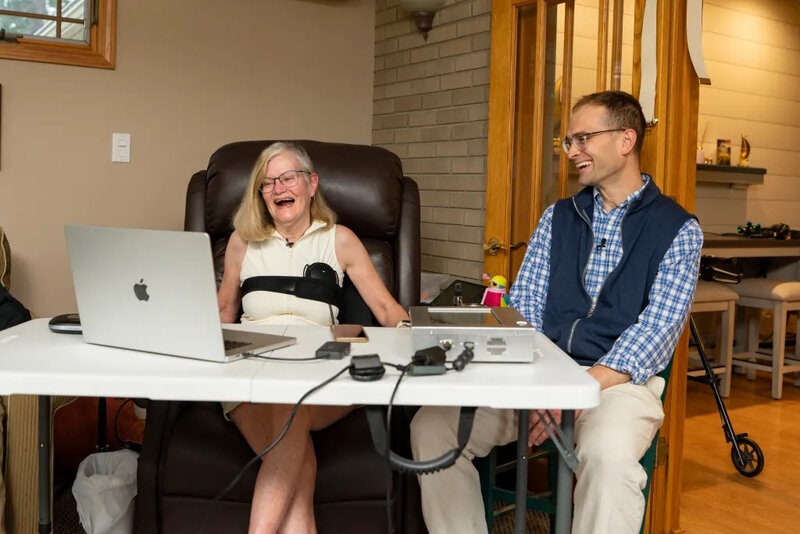
Paradromics is advancing assistive communication with real-time speech BCIs that translate neural activity into words for people with severe motor impairments. Its fully implanted Connexus Brain-Computer Interface enabled a woman living with motor neuron disease to generate her own words, respond to open-ended questions and communicate with family in real time. Rather than relying solely on predefined responses, the system interprets brain activity associated with intended speech, creating a more flexible pathway for conversation.
This development highlights the potential for implanted BCIs to restore more natural communication for people who have lost the ability to speak. For Paradromics, demonstrating real-time, open-ended communication strengthens the practical case for Connexus as the company advances its clinical platform. More broadly, successful demonstrations could increase interest in neural interfaces from healthcare providers, researchers and investors while supporting the emergence of specialized assistive technologies built around direct brain-computer communication.
Image Credit: The University of Michigan / Paradromics
What's Driving This Trend
- Implanted Speech Interfaces
- Fully implanted neural systems are expanding beyond cursor control into expressive communication, creating space for more natural digital interaction for people with severe paralysis.
- Open-ended Assistive Communication
- Real-time decoding of intended speech signals is reshaping assistive tools by reducing dependence on fixed phrase libraries and enabling more flexible personal expression.
- Clinical Neurotechnology Platforms
- Validated demonstrations of everyday communication through BCIs are strengthening the path toward scalable clinical platforms that combine neurosurgery, software and rehabilitation care.
Who This Affects Most
- Assistive Technology
- Advanced speech BCIs are broadening the assistive technology market with highly personalized communication systems for users with complex motor and speech limitations.
- Healthcare Technology
- Hospitals and care networks may see neural communication implants become part of specialized treatment pathways for neurodegenerative disease, stroke and severe paralysis.
- Neuroscience Research
- Direct brain-to-language systems are generating new commercial and academic interest in neural decoding, implanted sensors and real-world models of human speech intent.