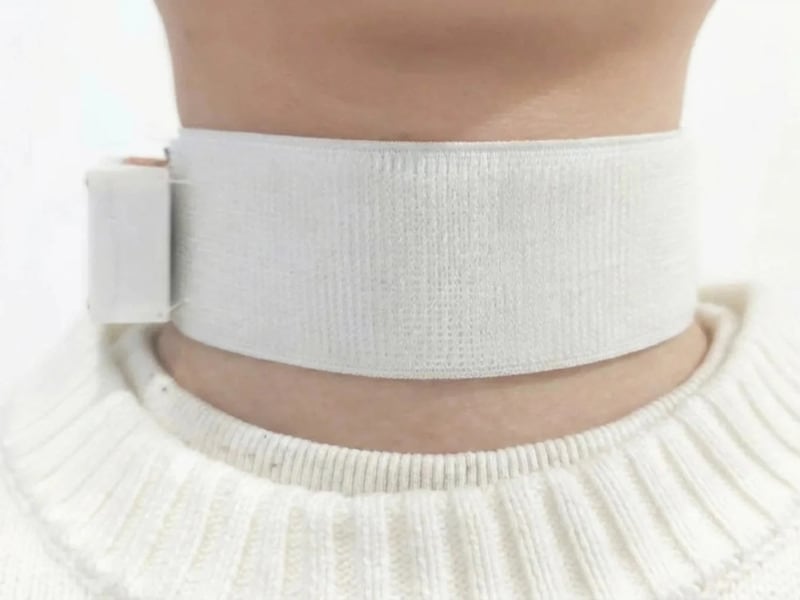
The Revoice voice device helps stroke survivors communicate by converting neuromuscular throat signals into clear synthesized speech through a wearable sensor and companion app. Developed by researchers at the University of Cambridge, Revoice places a lightweight patch-style sensor against the user’s neck to detect subtle muscle activity associated with intended speech. The captured signals are processed using machine-learning algorithms that interpret patterns tied to phonetic intent and relay the resulting audio through a smartphone or tablet.
In early tests, participants with speech loss due to stroke demonstrated improvements in intelligibility and communicative confidence compared with speaking without assistive support. The Revoice system transmits data via Bluetooth and displays recognized text on the app interface along with the spoken output, allowing users to adjust voice characteristics. A rechargeable battery supports multiple hours of continuous use, and ongoing development is focused on refining accuracy and expanding clinical studies before broader availability.
Image Credit: University of Cambridge
What Makes This Trend Stand Out
- Wearable Speech Technology
- Wearable devices that translate neuromuscular signals into speech present new pathways for communication aid development.
- AI-assisted Communication
- Machine-learning algorithms tailored for interpreting muscle signals offer innovative solutions for enhancing speech recovery.
- Bluetooth-enabled Healthcare Devices
- Wireless transmission of patient data through Bluetooth can enhance real-time interaction and device portability in medical wearables.
Sectors Adopting This
- Assistive Technology
- The growing demand for technology aiding in communication for individuals with disabilities opens new markets for innovation in assistive devices.
- Healthcare Wearables
- Integrating sensor technology in healthcare wearables appeals to the increasing need for non-invasive monitoring solutions.
- Artificial Intelligence
- The use of AI to decode and process complex human signals transforms conventional approaches in rehabilitation and therapy.