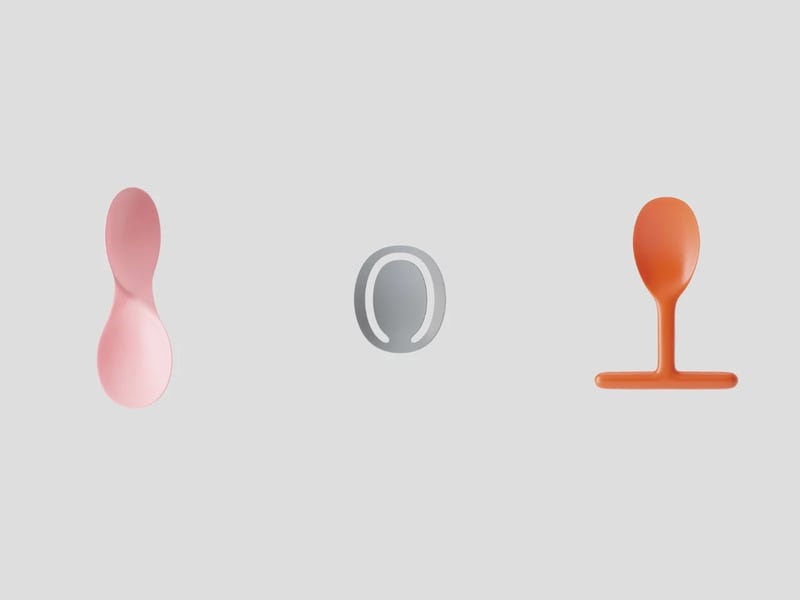
The Evolving Spoon project explores adaptive utensil forms by applying principles of biological evolution to the design of everyday cutlery. Developed by BKID co, the concept imagines spoons evolving through processes similar to mutation, recombination, and selection, resulting in a series of experimental forms that respond to hypothetical eating environments. The project presents multiple spoon variations, including spiral handles for thicker liquids, multi-bowl designs, and branching or perforated structures intended to test balance, grip, and material efficiency.
All spoon forms were produced using FDM 3D printing, allowing the designer to rapidly prototype speculative geometries that would be difficult to fabricate using traditional manufacturing methods. Rather than functioning as commercial products, the spoons serve as physical studies that examine how familiar tools might diverge if shaped by evolutionary logic instead of standardized ergonomics.
Image Credit: BKID co
Key Themes Behind This Trend
- Evolutionary Design in Utensils
- Exploring utensil designs through evolutionary principles introduces novel forms that challenge traditional ergonomics.
- 3D Prototyping for Consumer Goods
- Utilizing FDM 3D printing for rapid prototyping allows for experimentation with complex spoons that traditional manufacturing cannot easily produce.
- Adaptive Utensils for Varied Eating Contexts
- Designing spoons that adapt to different eating environments opens up possibilities for cutlery tailored to specific culinary experiences.
Where This Applies
- 3D Printing
- 3D printing’s capability to produce intricate structures is pivotal for testing speculative utensil designs not feasible through conventional methods.
- Tableware Design
- Innovations in tableware design inspired by biological evolution offer opportunities to reimagine everyday eating tools.
- Food Service Equipment
- Developing adaptive cutlery for unique food experiences creates new engagement opportunities within the food service industry.