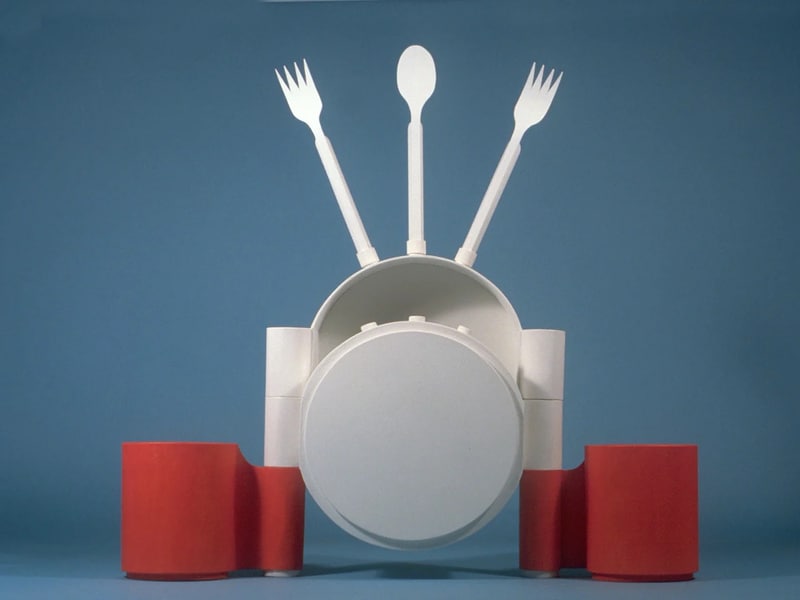
Art-Ware by Michael Jantzen reimagines traditional tableware as a system of interlocking objects that function both as dining tools and display sculptures. Each piece—plates, bowls, cups, and utensils—is designed with integrated connectors that allow them to attach, stack, and combine into larger freestanding formations. When not in use, the set assembles into abstract sculptural structures intended to remain on open display rather than being stored away.
The system is built using recyclable plastic and relies on molded male-and-female connection points embedded directly into each object. These allow components to link in multiple configurations, producing vertical stacks, clustered forms, or organic compositions depending on arrangement. The design removes the need for a separate storage solution by making the assembled state part of the product’s intended use, effectively merging storage and display into a single condition.
Image Credit: Michael Jantzen
What's Driving This Trend
- Modular Display Tableware
- A dining system that doubles as sculptural furniture enables products to remain visible and functional in living spaces without separate storage, creating new product categories that blend utility and décor.
- Integrated Utility-display Design
- Everyday objects designed to interconnect and form freestanding compositions shift the lifecycle of household items toward perpetual exhibition rather than concealed storage.
- Sustainable Recyclable Interlock Systems
- Use of recyclable plastics combined with molded male-and-female connectors suggests manufacturing approaches that prioritize material circularity alongside multi-positional functionality.
Who This Affects Most
- Home Furnishings
- Furniture and décor retailers could be impacted by products that merge storage with display, altering showroom design and consumer expectations around visible, multifunctional pieces.
- Hospitality and Food Service
- Restaurants and hotels may rethink tabletop presentation and back-of-house logistics as interlocking serviceware changes how sets are stored, displayed, and perceived by guests.
- Consumer Goods Manufacturing
- Manufacturers of tableware and plastic components face opportunities to develop durable, recyclable mating features and new assembly-line tooling for multi-configurable products.