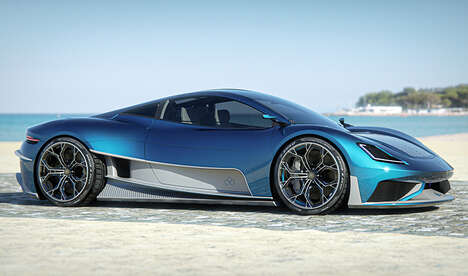

City vehicles are put under increased wear and tear during daily commutes and intense driving, so the Shell Project M concept car is intended to feature components that work in unison. The vehicle features bespoke lubricants that allow the vehicle to have a 5% increase in efficiency when compared to standard lubricants on the market.
Capable of offering drivers up to 89mpg, the Shell Project M concept car can reach speed of up to 97mph. The vehicle features a front portion and door section that lifts away from the city vehicles main chassis to allow access to the interior cabin.
The Shell Project M concept car was designed with Gordon Murray Design's iStream aesthetic and features several components that are 3D-printed to help cut down on manufacturing time.
Key Themes Behind This Trend
- Increased Fuel Efficiency
- Bespoke lubricants and 3D-printing technology offer opportunities for developing more efficient city vehicles.
- Streamlined Vehicle Design
- The lifting front portion and 3D-printed components open up possibilities for creating innovative, accessible interior cabin designs in city vehicles.
- Advanced Manufacturing Techniques
- The use of 3D-printing technology in vehicle manufacturing presents disruptive innovation opportunities for the automotive industry.
Where This Applies
- Automotive
- The automotive industry can leverage bespoke lubricants and 3D-printing technology to improve fuel efficiency and design in city vehicles.
- Chemical
- Chemical companies have the potential to develop and supply bespoke lubricants that can enhance the efficiency of city vehicles.
- Manufacturing
- Manufacturing industries involved in automotive production can explore the integration of 3D-printing technology to streamline manufacturing processes and reduce costs.