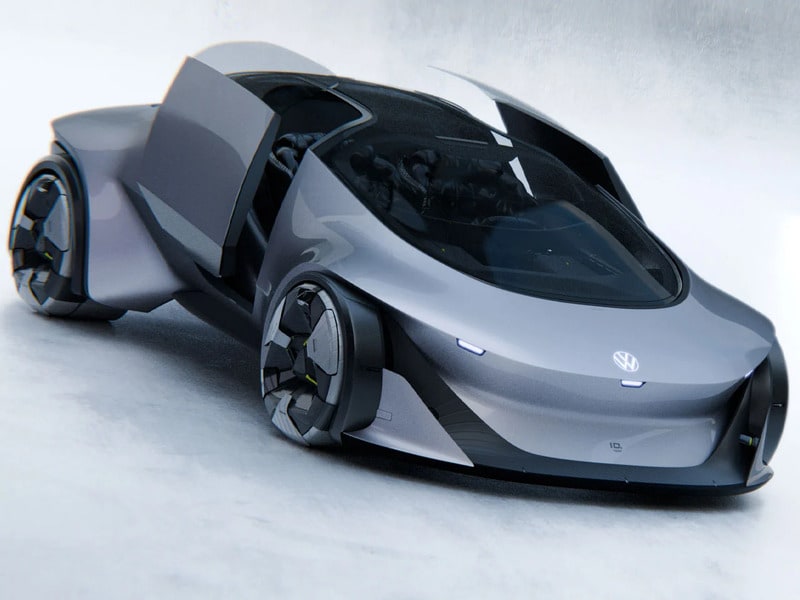
The Volkswagen Numa Concept imagines cars as part of shared city life by reframing the vehicle as a soft architectural element rather than a traditional automobile. The design features calm surfaces, rounded edges, and a gentle silhouette that blends visually into dense urban environments. Its rear section incorporates space for potted plants, creating a small moving garden that brings greenery into areas where nature is often limited. The concept positions mobility as something that can integrate with community space and support a more harmonious streetscape.
The interior is conceived as a quiet micro-environment that offers flexible seating and open sightlines to reduce visual clutter. Large windows create a sense of transparency that contributes to a more welcoming presence on the street. The project presents a vision of mobility that supports a slower, more considerate form of city living by treating cars as adaptable civic objects rather than isolated machines.
Image Credit: Daniil Ostrovskii
What's Driving This Trend
- Urban Green Integration
- The blending of vehicles with greenery, like potted plants on cars, offers a unique way to introduce nature into urban settings previously devoid of it.
- Architectural Design Vehicles
- Reimagining cars as soft architectural features allows them to merge aesthetically with urban landscapes, potentially reducing visual pollution.
- Mobility as Community Space
- Viewing vehicles as adaptable civic objects fosters a vision of shared mobility that emphasizes community and connectivity over isolation.
Who This Affects Most
- Sustainable Urban Development
- Urban planners and developers can harness vehicle designs that integrate greenery to promote more sustainable and aesthetically pleasing cityscapes.
- Automotive Design Innovation
- The redefinition of vehicles as architectural elements opens new avenues for designers seeking to innovate beyond traditional automotive forms.
- Shared Mobility Solutions
- This concept fuels the opportunity for industries focused on shared transportation to create models that prioritize community integration and environmental harmony.