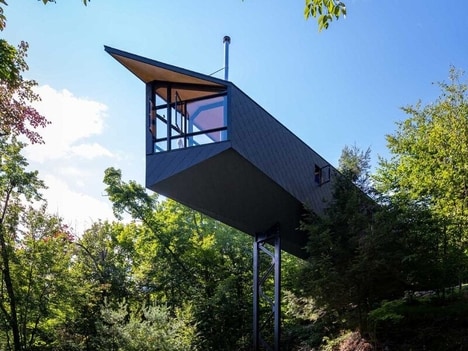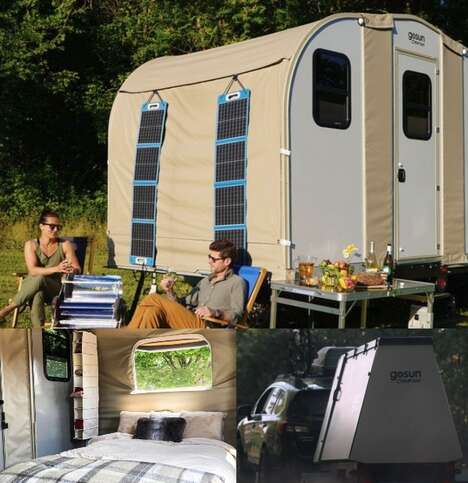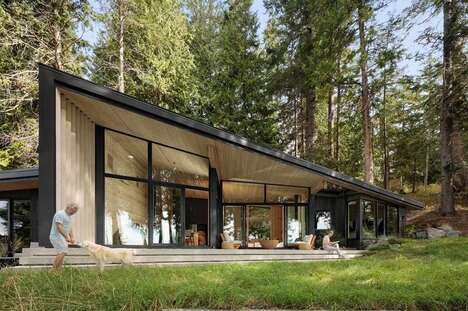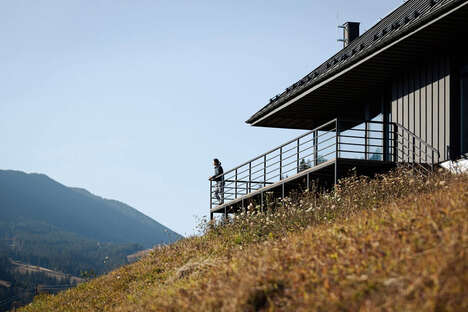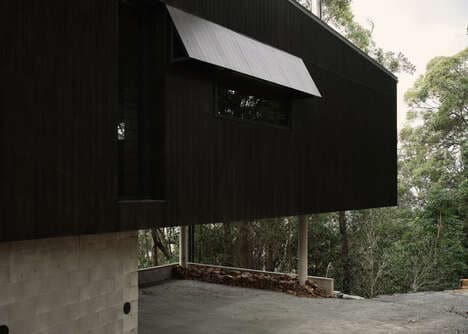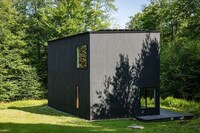
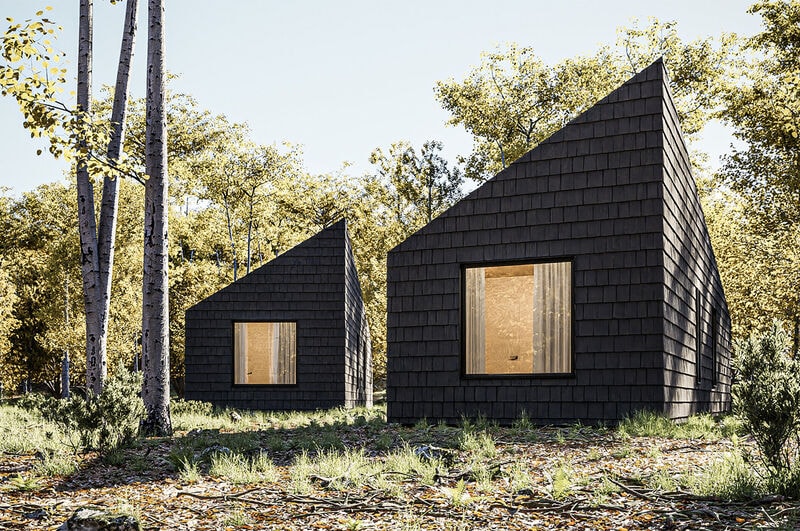
Marc Thorpe designed the Canton House and took inspiration from the local area's shingled roofs and facades. Blackened from top to bottom, the Canton House boasts a trio of triangular-roofed cabins. The off-grid cabins are solar-powered. Located in the forest of Romania's Carpathian Mountains, the cluster of cabin hotels immerse guests into the rugged wilderness.
The cabins boast a uniform exterior facade with wooden shingles. From the front, Canton House appears as a rectangular cabin framed with blackened wood. However, the getaway's triangular roof is visible from the side and gives off a dramatic facade. Finished with a kitchenette, a bathroom, a bedroom, utility closer, and storage rooms, Thrope created grounding cabins to invite guests to reconnect with nature.
Image Credit: Marc Thorpe
What's Driving This Trend
- Off-grid Cabins
- Creating off-grid cabins with sustainable energy sources can offer a unique, eco-friendly travel experience.
- Solar-powered Buildings
- Incorporating solar panels into building designs can help promote sustainable energy usage and reduce reliance on traditional energy sources.
- Local Sourcing
- Using locally sourced materials and designing buildings that blend in with the local environment can help promote a sense of connection with nature and support the local economy.
Who This Affects Most
- Travel and Tourism
- Integrating sustainable and off-grid accommodations into travel and tourism offerings can appeal to eco-conscious travelers and contribute to a more sustainable industry overall.
- Architecture and Design
- Incorporating sustainable materials and energy sources into building designs can help architects and designers create innovative, eco-friendly structures.
- Renewable Energy
- Developing and advancing solar technology can help enable off-grid living and promote a more sustainable future for cities and rural areas alike.