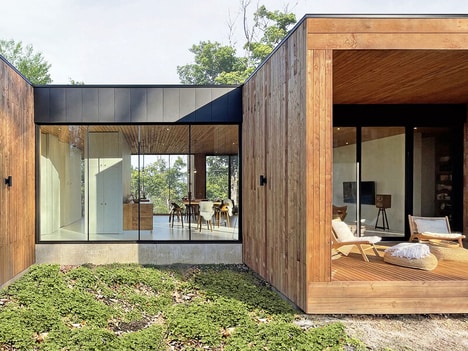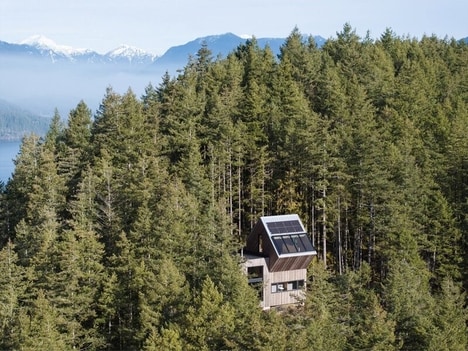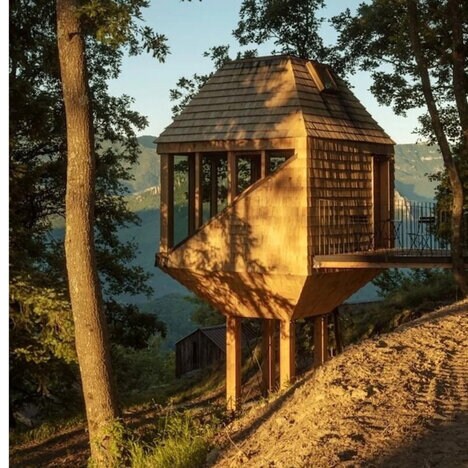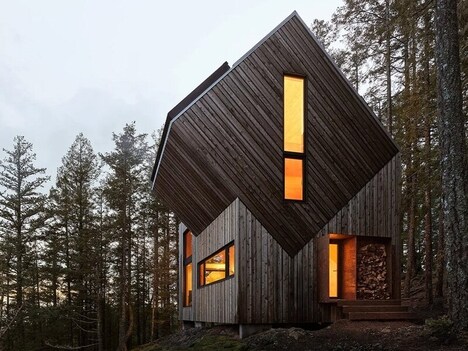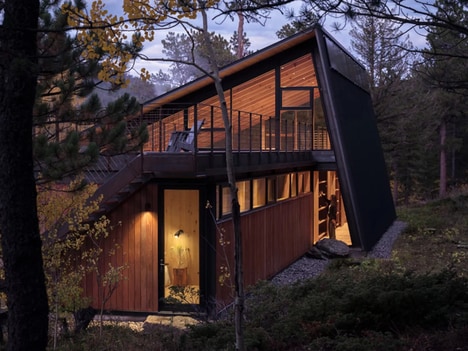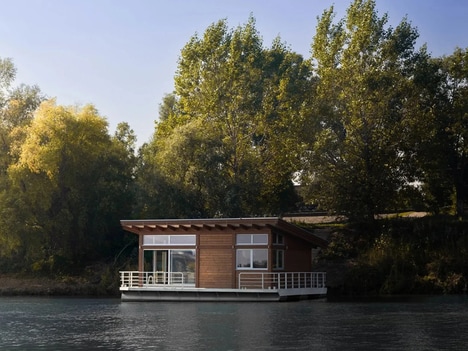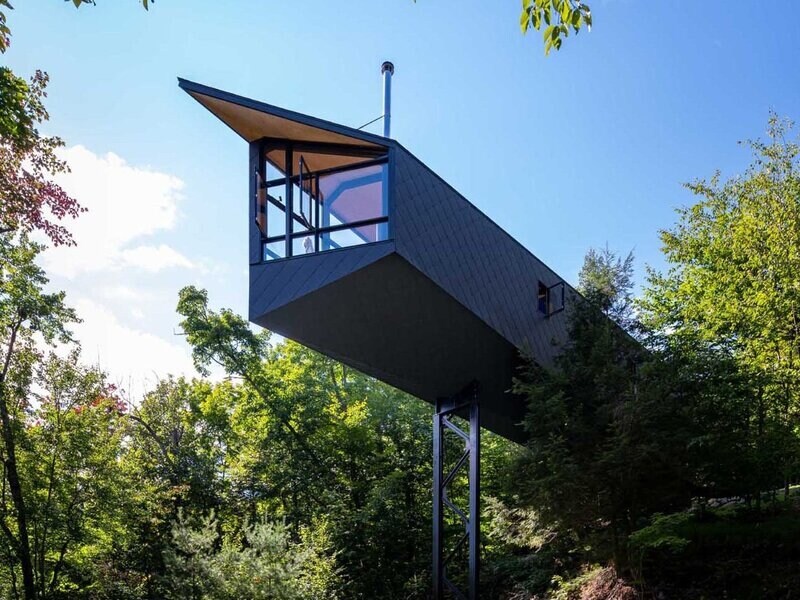
The MORE Cabin by Kariouk Architects perches a 900-square-foot structure high above the forest floor in Wakefield, Quebec, supported by a single steel mast. Designed to disturb the landscape as little as possible, the cabin uses cross-laminated timber panels, glulam beams, and strategic steel reinforcements to remain stable while touching the ground only at one point. The result is a dramatic, elevated retreat that blends structural innovation with environmental care.
Entirely off-grid, the cabin generates its own power and manages water independently, emphasizing self-sufficiency. The steel mast also incorporates habitat spaces for endangered bats, merging architectural form with ecological function. Expansive glazing opens views of the lake below and forest canopy above, allowing natural light to flood the interiors. With its warm wood finishes and striking cantilevered design, the MORE Cabin demonstrates how architecture can balance bold expression with minimal impact on its surroundings.
Image Credit: Kariouk Architects
What Makes This Trend Stand Out
- Sustainable Architecture
- Innovative designs like the MORE Cabin highlight the potential for architecture to minimize ecological impact while meeting modern aesthetic and functional demands.
- Off-grid Living Solutions
- The self-sufficient nature of the MORE Cabin showcases advances in independent power and water systems, pointing to growing trends in sustainable living practices.
- Nature-integrated Design
- By incorporating habitat spaces for endangered species within its structure, the MORE Cabin exemplifies a trend towards architecture that actively contributes to local ecosystems.
Sectors Adopting This
- Eco-friendly Construction
- Firms focusing on sustainable building materials and designs are poised to see growth as demand rises for structures with minimal environmental footprints.
- Renewable Energy Systems
- The off-grid systems of the MORE Cabin illustrate opportunities for advancements in renewable energy technologies tailored for remote or self-sufficient applications.
- Wildlife Conservation Architecture
- Architecture that incorporates features promoting biodiversity, such as habitat spaces, is emerging as a unique field within the broader green building movement.