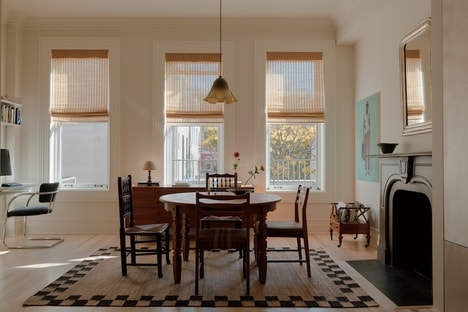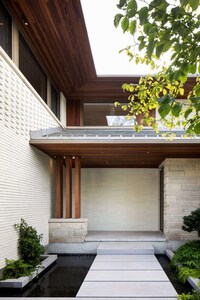
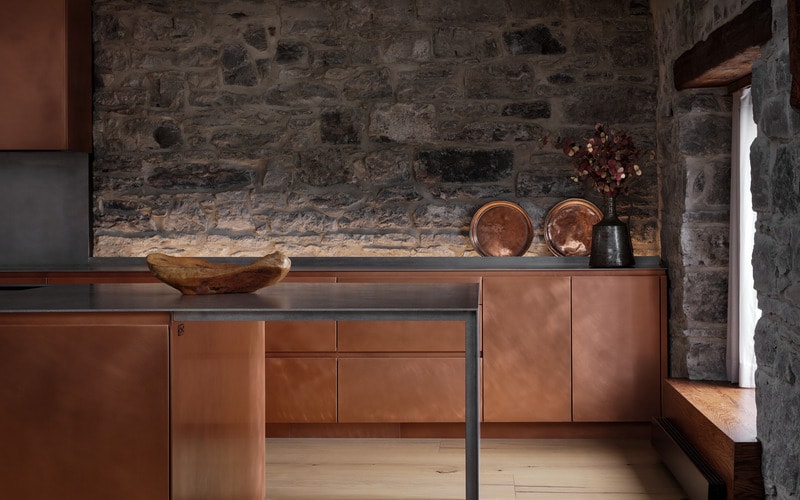
MU Architecture was successful in transforming a duplex apartment within a historic Montreal building into a modern residence that intentionally preserves and celebrates its original architectural character. The design approach focused on a harmonious integration of contemporary elements with exposed historical features, including stone walls and wooden structural components that were meticulously restored.
MU Architecture designed an open-concept layout on the main floor to facilitate fluid movement between living areas, a custom-designed kitchen with distinctive copper cabinetry and stainless steel surfaces serving as a bold centerpiece, and a sculptural staircase connecting to a privately reimagined upper level housing boutique hotel-inspired bedrooms and bathrooms. The firm was strategic about its selection of materials, as well. The exceptionally wide and long oak plank flooring, for example, immediately captures attention.
Image Credit: Ulysse Lemerise Bouchard
What Makes This Trend Stand Out
- Heritage-preservation Designs
- Modern architecture that preserves historical elements presents new opportunities to merge old-world charm with contemporary aesthetics.
- Open-concept Living Spaces
- Innovative spatial designs that promote fluidity and connectivity within homes reflect a growing demand for versatility in residential architecture.
- Luxury Material Integration
- The strategic use of high-end materials, like copper and oak, in residential interiors highlights a trend towards premium finishes that elevate everyday living.
Sectors Adopting This
- Luxury Residential Architecture
- Designing homes that fuse luxury and historical aesthetics targets high-net-worth individuals seeking distinctive living environments.
- Interior Design
- Innovations in material selection and spatial layout by interior designers meet the demand for personalized and upscale residential experiences.
- Historic Building Restoration
- Transforming historic structures into modern living spaces represents a niche sector within the construction industry focused on preservation and modernization.