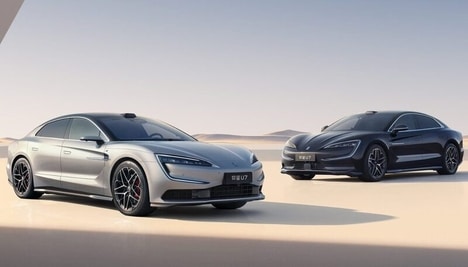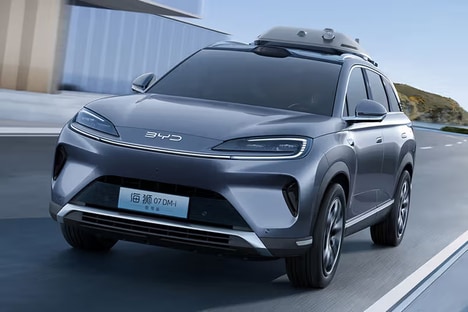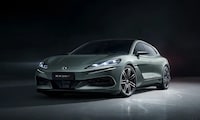
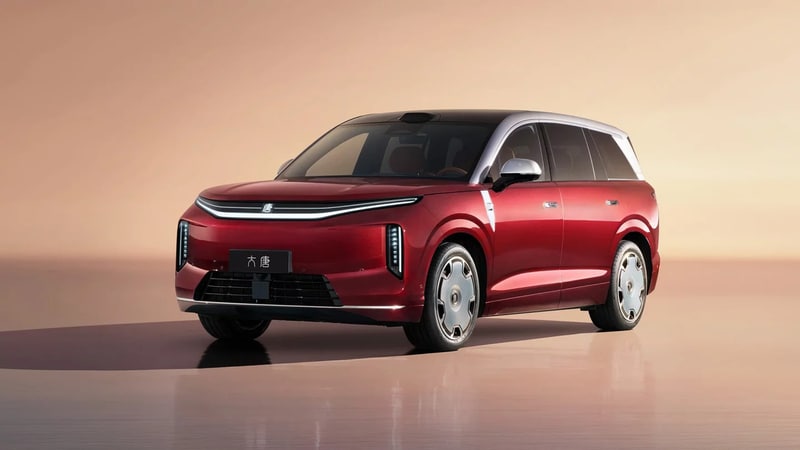
The BYD Great Tang electric SUV is the China-based EV brand's latest full-size flagship crossover that responds to the demand for larger vehicle models, while also taking costs into account.
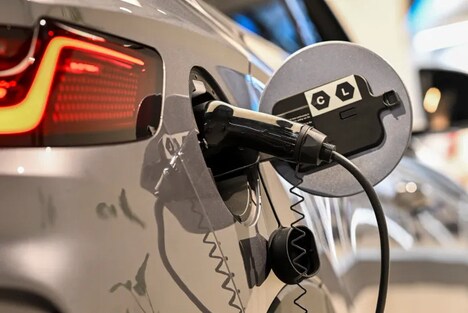
The vehicle is built with the brand's 1,000V high-voltage architecture and paired with a lithium-iron-phosphate battery with a 105.79kWh capacity. The SUV is thus rated to achieve 497-miles of CLTC range, while a larger capacity option is rated for 590-miles of CLTC range. The flash charging support is rated to get the battery from 10% to 70% in five-minutes, while a 97% charge can be achieved in nine-minutes and a full charge in under 10-minutes.
The BYD Great Tang electric SUV has a seven-seat capacity, backed by the brand's God's Eye 5.0 ADAS system and competitively priced starting at 239,90 yuan (~$35,410).
Image Credit: BYD
What's Driving This Trend
- Affordable Full-size Evs
- Lower-priced seven-seat electric SUVs are widening premium vehicle access and creating room for mass-market brands to challenge legacy automakers in family mobility.
- Ultra-fast Flash Charging
- Five-to-ten-minute charging performance reduces one of the biggest barriers to EV adoption and reshapes expectations around battery design, station throughput, and long-distance travel.
- Integrated ADAS Value
- Advanced driver assistance bundled into competitively priced models signals a shift toward safety and autonomy features becoming standard differentiators rather than luxury add-ons.
Who This Affects Most
- Electric Vehicles
- Cost-conscious flagship SUVs with long range and high-voltage platforms are intensifying competition across global EV markets and accelerating the move from niche electrification to mainstream ownership.
- Battery Technology
- Lithium-iron-phosphate packs paired with high-capacity architectures highlight new possibilities for durable, lower-cost batteries that support both affordability and rapid charging.
- Charging Infrastructure
- High-power charging capabilities create pressure for next-generation public and private networks that can match faster vehicle charging speeds and improve utilization economics.