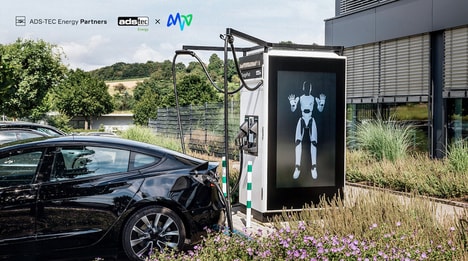
BYD introduced a flash charging system built around its second-generation Blade Battery, demonstrating the setup at a Beijing charging facility and featuring overhead, side-accessible cabling designed for faster and more convenient charging stops. The company positioned the redesigned battery to support significantly higher charging rates while improving heat management and low-temperature performance, with vehicles already actively using the stations on site.
The system supports charging speeds of up to 1,500 kW through a single connector, and BYD claimed the platform can charge from 10% to 97% in roughly 12 minutes under certain test conditions. The company also highlighted simultaneous safety tests designed to simulate severe battery failure scenarios. BYD said it plans to rapidly scale its infrastructure, targeting 20,000 charging stations by the end of 2026 alongside expansion beyond China.
For drivers, the platform reframes EV charging as a short convenience stop rather than a prolonged interruption, potentially reshaping consumer expectations around long-distance electric travel if real-world deployment and charging consistency align with the company’s claims.
Image Credit: Shutterstock/xprabadi
Key Themes Behind This Trend
- Ultra-fast Charging Infrastructure
- Charging sessions measured in minutes instead of hours shift consumer expectations for EV range and create space for retail and mobility services around brief stopovers.
- Advanced Battery Thermal Management
- Improved heat control and low-temperature performance in next-gen cells allow for reliably higher charge rates and denser charging station utilization without compromising safety.
- Overhead and Side-accessible Cabling
- Space-saving overhead delivery and side-access connectors enable faster vehicle turnaround at stations and open design opportunities for urban and highway charging footprints.
Where This Applies
- Automotive Original Equipment Manufacturers
- Vehicle designs optimized around high-rate batteries and single-connector interfaces could differentiate models by enabling near-refueling parity with ICE vehicles on long trips.
- Charging Network Operators
- Operators capable of deploying scalable 1,500 kW stations stand to redefine route planning and service offerings through denser, fast-stop charging ecosystems.
- Energy Grid and Storage Providers
- Grid-scale storage and smart load management solutions become critical as concentrated, high-power charging loads require buffering and dynamic dispatch to maintain stability.