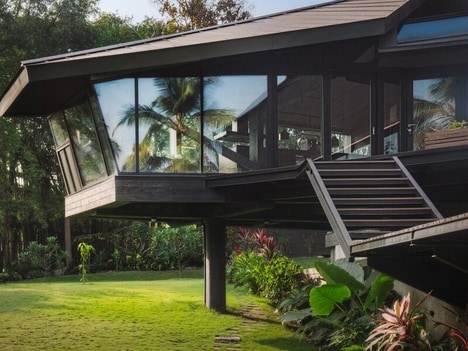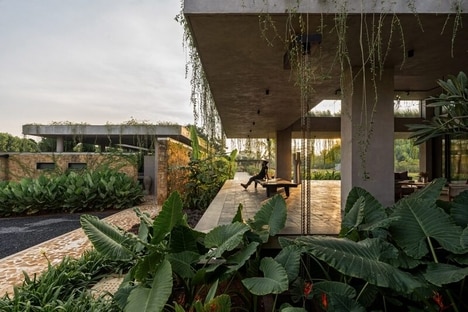
The ‘Bridge House’ is a residential bridge house, located in the Indian state of Maharashtra, that is situated over two streams and manages to connect two disparate parcels of land without disturbing the water and terrain located right below it.
Created by Wallmakers, the structure of this habitable bridge uses a novel blend of steel pipes and tendons which provide tensile strength, along with mud and thatch for compression capabilities.
The home includes four bedrooms, along with kitchen and living areas arranged within an open layout. A central oculus-style courtyard brings in light and rain, while large openings and windows connect the interior to the surrounding environment.
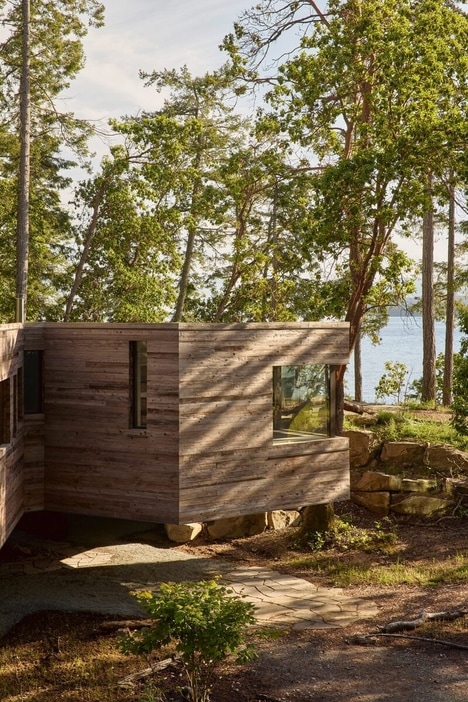
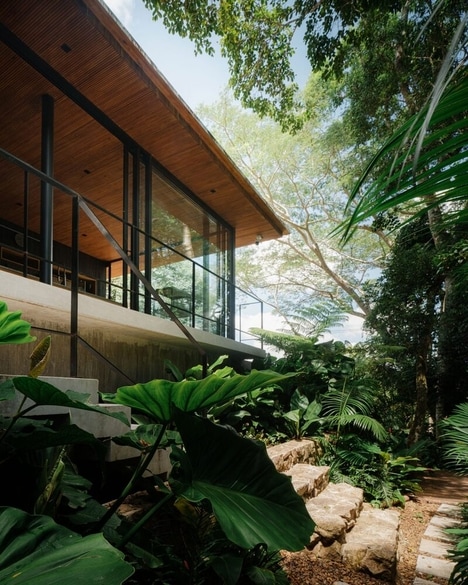
Ultimately, the 'Bridge House' is a fine example of architecture that is designed to blend into rather than overpower the surrounding environment, both in terms of its aesthetics and material usage.
Image Credit: Wallmakers
Why This Trend Is Growing
- Habitable Infrastructure
- A shift toward structures that combine transportation or connectivity functions with livable spaces presents new models for multifunctional built environments that maximize land use without expanding footprints.
- Hybrid Material Construction
- The blending of tensile steel systems with traditional earthen and thatch elements reveals possibilities for cost-efficient, climate-adaptive composites that balance strength with low embodied energy.
- Contextual Low-impact Design
- Designing buildings to integrate with existing terrain and hydrology points to scalable approaches for minimizing ecological disturbance in sensitive or rural sites.
Industries Being Reshaped
- Residential Architecture
- Architectural practices focused on housing can be transformed by incorporating bridge-like structural strategies that enable dwellings in constrained or fragmented plots.
- Bridge Engineering
- Conventional bridge engineering stands to diversify through adoption of habitable load-bearing solutions that merge public infrastructure with private or communal programmatic uses.
- Sustainable Materials Manufacturing
- Producers of construction materials may find demand for hybrid, locally sourced composites that offer structural performance alongside reduced transportation and processing emissions.