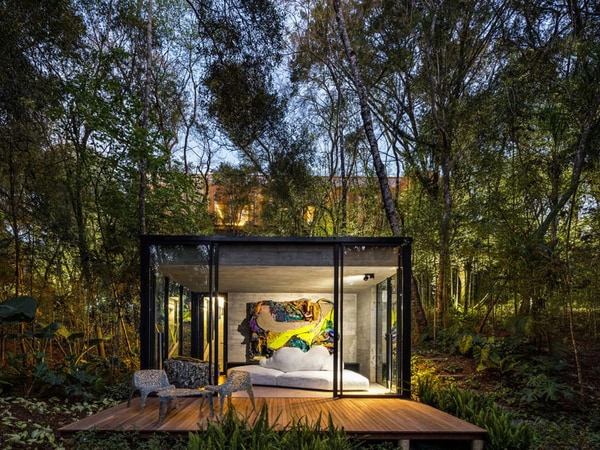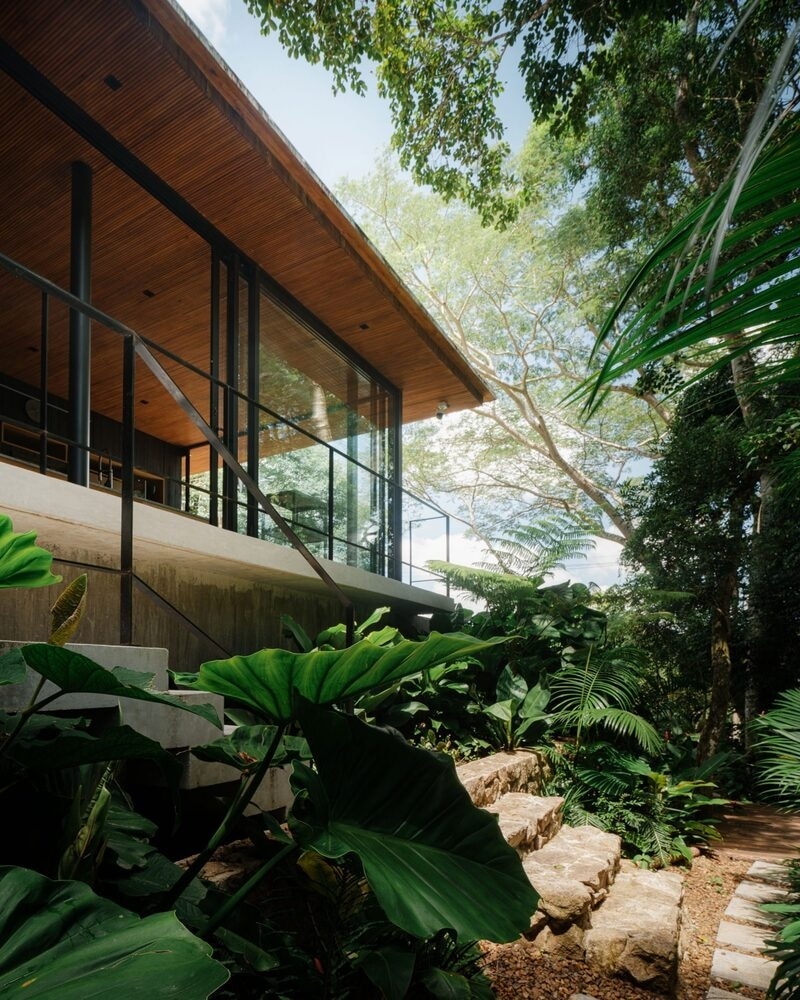
Casa Guapuruvu by Cornetta Arquitetura is a residential project in Brazil’s Atlantic Forest that positions living spaces to engage directly with the surrounding landscape through geometry, daylight, and material clarity. The house is composed of interlocking volumes that open toward forested edges, creating framed views and multiple thresholds between indoors and outdoors. Large glazed panels on primary elevations allow natural light to penetrate deep into the plan while providing visual continuity with vegetation, and structural overhangs modulate sunlight throughout the day.
The residence is sited to minimize disruption to existing topography and vegetation, with elevated slabs and slender supports used where required to preserve ground conditions. Materials such as exposed concrete and natural timber are chosen to relate to the forest environment while offering durability and thermal performance. Transitions between interior spaces and outdoor terraces are gradual rather than abrupt, supporting a layered spatial experience that alternates open and sheltered zones.
Image Credit: Pedro Kok
Why This Trend Is Growing
- Biophilic Architectural Design
- Emphasizing seamless integration with natural landscapes, biophilic design uses geometry and natural light to enhance living environments.
- Sustainable Building Materials
- Innovative use of materials like exposed concrete and natural timber meets ecological requirements while delivering durability and thermal efficiency.
- Adaptable Indoor-outdoor Spaces
- Designs that blur the line between indoors and outdoors create versatile living areas that respond to environmental contexts.
Industries Being Reshaped
- Residential Architecture
- Architects in the residential sector are exploring new ways to align building designs with surrounding natural landscapes.
- Construction Materials
- The construction materials industry is evolving to supply eco-friendly options such as durable yet natural materials that harmonize with environmental settings.
- Environmental Landscaping
- Landscaping firms are capitalizing on design strategies that preserve natural topographies and integrate seamless transitions between built and natural environments.