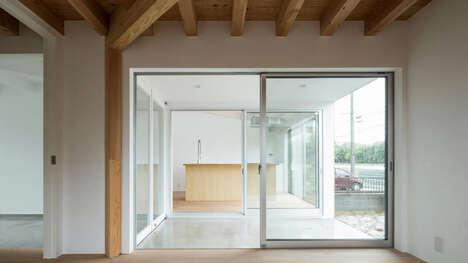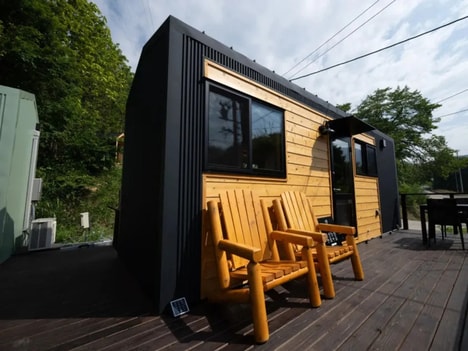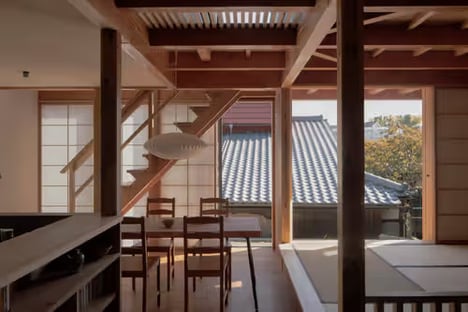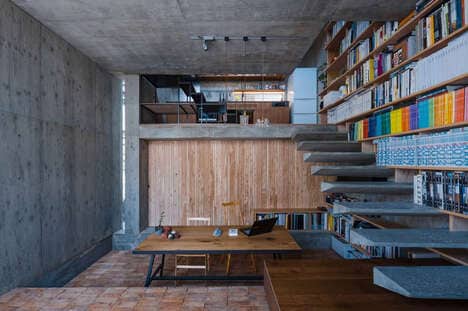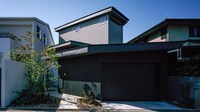

This boxy house in Shizuoka, Japan was designed by Suzuki Architects and envisioned to fulfill a dual purpose. Ultra-compact and minimalist in aesthetic, the structure's ground floor is occupied by an independent fashion retail business, while the upper floor is a tiny open-space home for the client's mother.
The architectural practice challenged itself with the dimensions of this boxy house and successfully incorporated a bathroom, a bedroom and a nice terrace for the upper floor, as well as a kitchen, a toilet and a storage area on the lower. Dubbed 'Gré Square House,' the cubic structure's open-concept arrangement and the majorly punctured corrugated metal facade allows for natural light to fill the boxy house, creating a very homey and inviting ambiance.
Photo Credits: Kenta Hasegawa
What's Driving This Trend
- Boxy Houses
- Increased demand for minimalist and dual-purpose boxy houses creates an opportunity for architects and developers to design innovative and compact spaces.
- Home-workspace Hybrid
- The rise of remote and flexible work has created a growing market for home-workspace hybrid designs that provide functional and inspiring spaces for both living and working.
- Open-concept Arrangement
- The popularity of open-concept living spaces presents an opportunity for architects to experiment with flexible and multifunctional designs.
Who This Affects Most
- Architecture
- The need for innovative and functional dual-purpose designs presents an opportunity for architects to create new solutions and expand their portfolios.
- Real Estate Development
- The increasing demand for boxy houses and home-workspace hybrids presents an opportunity for real estate developers to tap into new markets and meet changing consumer preferences.
- Retail
- Designing retail spaces that incorporate multi-functional living areas presents an opportunity for retailers to create unique and engaging shopping experiences that meet the needs of today's consumers.