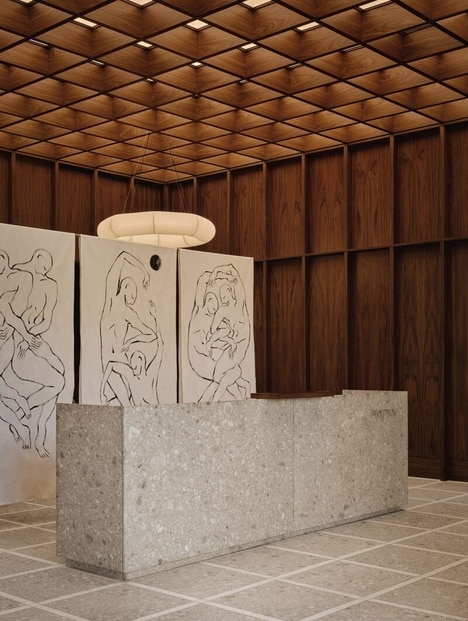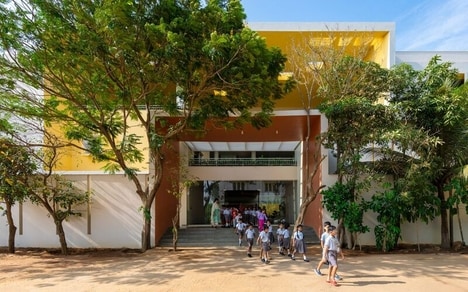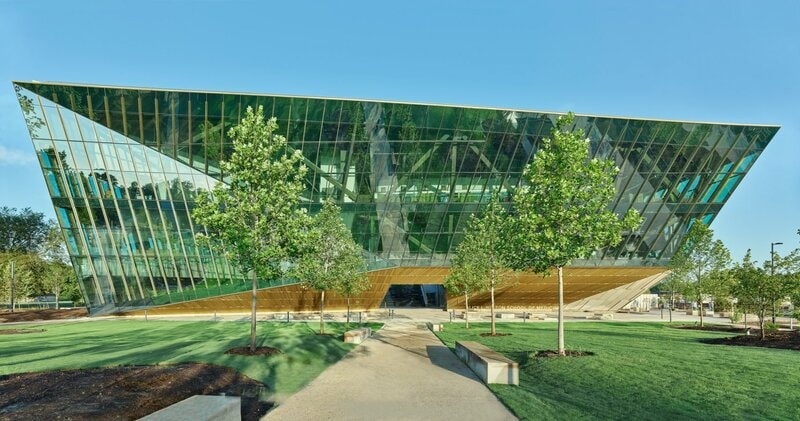
The Bentonville School of Medicine by Polk Stanley Wilcox, funded by Alice Walton, introduces a purpose-designed campus that merges medical education with community wellness. Set in a previously underused municipal landscape, the project transforms two low-rise buildings into clinical learning environments and teaching spaces. Inspired by Arkansas’s regional vernacular, the design features warm brick facades, deep overhangs, and landscape-led courtyards that tie indoor environments to outdoor healing gardens. The result is a facility that feels grounded and approachable despite its academic purpose.
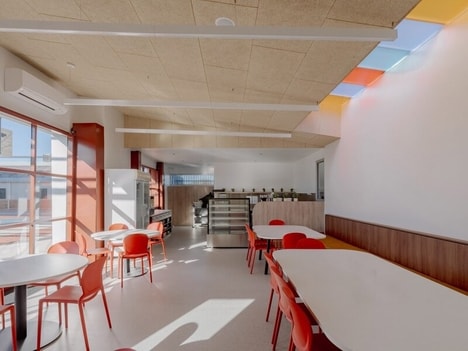
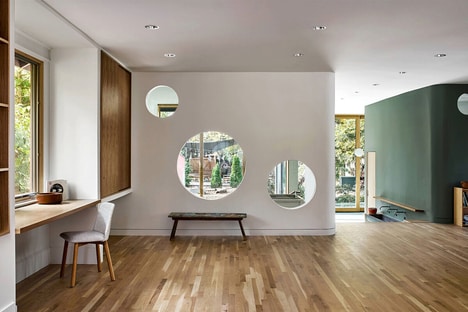
Inside, daylight-filled classrooms and simulation labs sit alongside public health hubs and patient-care clinics, creating seamless overlap between education and community service. Timber accents and human-scaled details soften the clinical interior, while collaborative spaces foster interaction among students, staff, and local residents. Thoughtful planning prioritizes wellness and accessibility—wide circulation paths, natural ventilation, and habitat-rich landscaping encourage movement, social connection, and reflection. The Bentonville School of Medicine sets a new bar for educational architecture, blending healthcare, learning, and community into a cohesive, people-centered environment.
Image Credit: Timothy Hursley
Why This Trend Is Growing
- Integrated Learning-healthcare Spaces
- Integration of learning and healthcare facilities creates multifaceted environments that enhance both educational experiences and community wellness.
- Nature-inspired Architectural Design
- Nature-inspired architectural elements, such as landscape-led courtyards and healing gardens, promote mental well-being and a sense of tranquility in institutional settings.
- Community-centric Campus Designs
- Designs that prioritize public health hubs and collaborative spaces within educational campuses enhance social interaction and community engagement.
- Nature-inspired Architectural Design
- Nature-inspired architectural elements, such as landscape-led courtyards and healing gardens, promote mental well-being and a sense of tranquility in institutional settings.
- Community-centric Campus Designs
- Designs that emphasize public health hubs and collaborative spaces within educational campuses foster social interaction and community engagement.
Industries Being Reshaped
- Educational Architecture
- By reimagining educational spaces to include features like daylight-filled classrooms and simulation labs, educational architecture is enhanced to support diverse learning modalities.
- Healthcare Infrastructure
- Merging clinical environments with educational spaces drives innovation in healthcare infrastructure, creating settings that support both learning and community health services.
- Landscape Architecture
- Incorporating habitat-rich landscaping and natural ventilation into campus design highlights the expanding role of landscape architecture in fostering sustainable, wellness-focused environments.