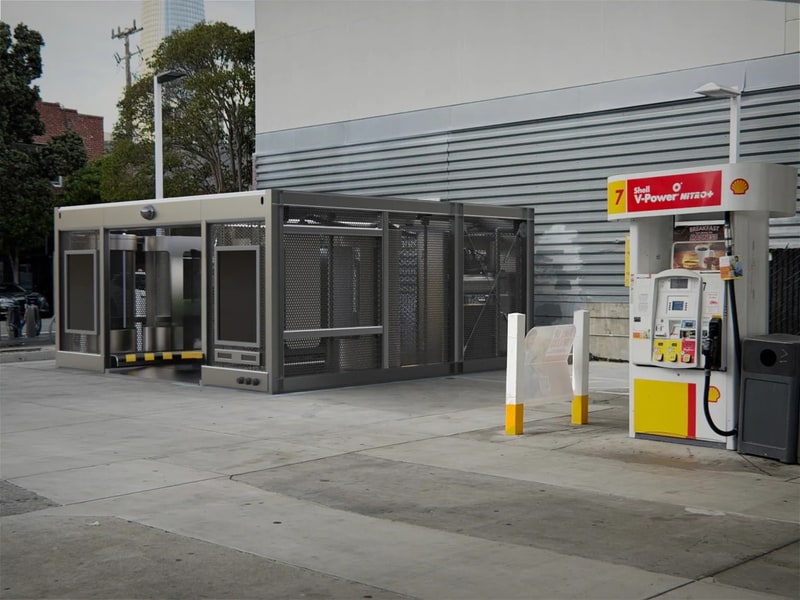
Autonomous vehicles (AV) might be touted as the future but require infrastructural changes to accommodate them on city streets more seamlessly, which is something Aseon Labs aims to help with. The startup takes aim at the deadhead miles -- the amount of mileage AVs drive with no paying passenger -- that robotaxis stack up when moving between depots for charing and cleaning. The company aims to solve this issue with parking space-sized pods that could be integrated into the cityscape to charge the electric vehicles and have them ready for rides once again.
The charging stations from Aseon Labs would also leverage computer vision and artificial intelligence (AI) to detect issues that can't be solved and that require human intervention toe handled.
Image Credit: Aseon Labs
Key Themes Behind This Trend
- Distributed Robotaxi Servicing
- Parking-space-sized maintenance pods create opportunities for decentralized charging and cleaning networks that reduce deadhead miles and improve fleet utilization.
- AI-powered Vehicle Triage
- Computer vision diagnostics enable automated issue detection, opening space for predictive maintenance platforms that reserve human labor for complex repairs.
- Curbside AV Infrastructure
- Compact service nodes embedded into city streets point to new urban infrastructure models where mobility assets are maintained closer to rider demand.
Where This Applies
- Autonomous Vehicles
- Robotaxi operators gain a pathway to higher uptime through localized service automation that supports larger fleets without relying solely on centralized depots.
- Electric Vehicle Charging
- Urban charging providers can evolve beyond power delivery into integrated service hubs that combine energy, cleaning, inspection, and fleet readiness.
- Smart Cities
- Municipal infrastructure planning is expanded by modular AV support systems that blend mobility operations with curb management and public-space efficiency.