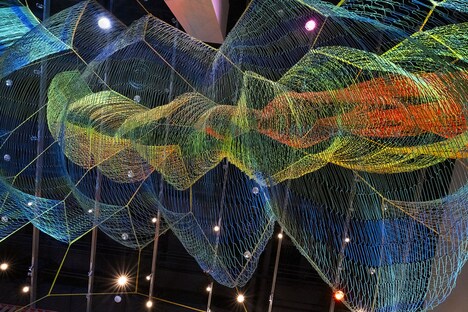
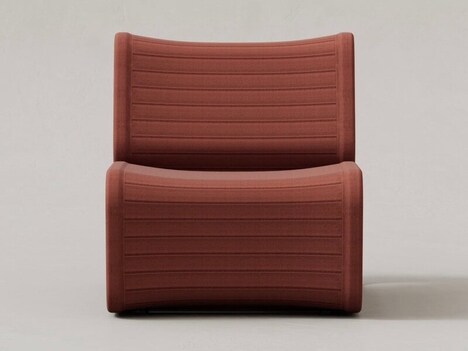
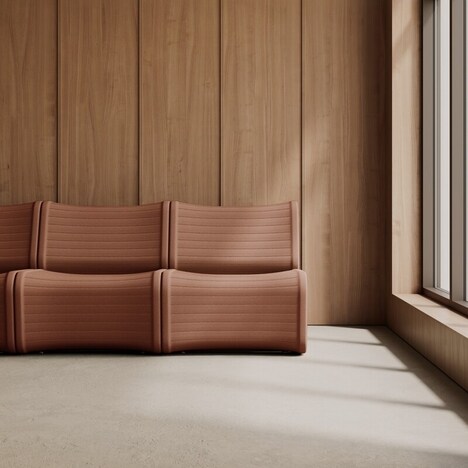
Adaptive Knit, a project that debuted at the Royal Danish Academy during the ‘Imagining Futures Through Architecture and Design’ exhibition, is a kinetic textile structure. Developed by an interdisciplinary team led by Martin Tamke, the innovation features five panels of ribbed, CNC-knitted patterns made from natural materials that create flexible solar protection. The textile responds to its surroundings through changing geometries, colors, and textures without relying on complicated mechanics or excessive resource consumption.
An adaptive textile that can respond to changing sunlight and temperature passively, using only the inherent properties of knitted natural materials, could dramatically reduce the need for mechanical cooling in homes. This is noteworthy because as temperatures rise, the demand for cooling is projected to skyrocket, leading to higher electricity bills, greater strain on power grids, and increased carbon emissions from air conditioning units.
Image Credit: Shahriar Akbari
What Makes This Trend Stand Out
- Passive Kinetic Textiles
- Offers potential to replace motorized shading systems by using knitted structures that change geometry and porosity in response to light and temperature.
- Biomaterial Responsive Fabrics
- Made from natural fibers and CNC-knitted architecture, these fabrics present possibilities for low-embodied-carbon adaptive building elements.
- Geometry-driven Climate Modulation
- Leveraging patterning and ribbed knit geometries, textiles can modulate airflow and solar gain without active energy input.
Sectors Adopting This
- Building Envelope and Facades
- Adaptive knit panels could alter façade permeability dynamically, reducing peak cooling loads and grid stress in warm climates.
- Residential HVAC and Cooling
- Passive textile-based shading has potential to lower reliance on mechanical cooling by reducing indoor heat gain through material-driven responses.
- Wearable and Adaptive Apparel
- Kinetic knit structures may enable garments that regulate microclimate around the body through geometry changes rather than powered electronics.