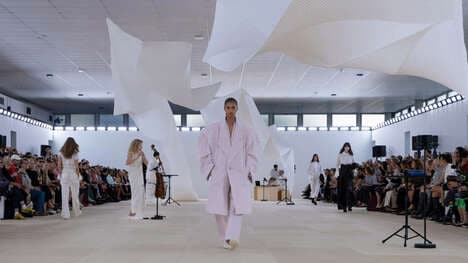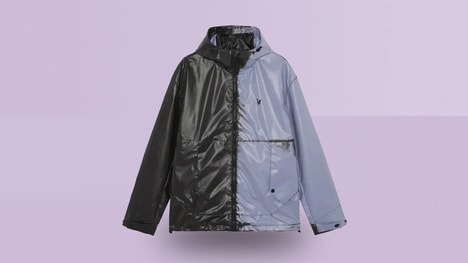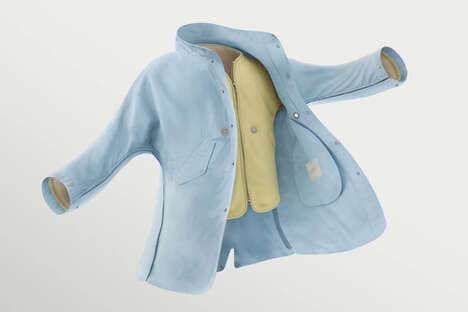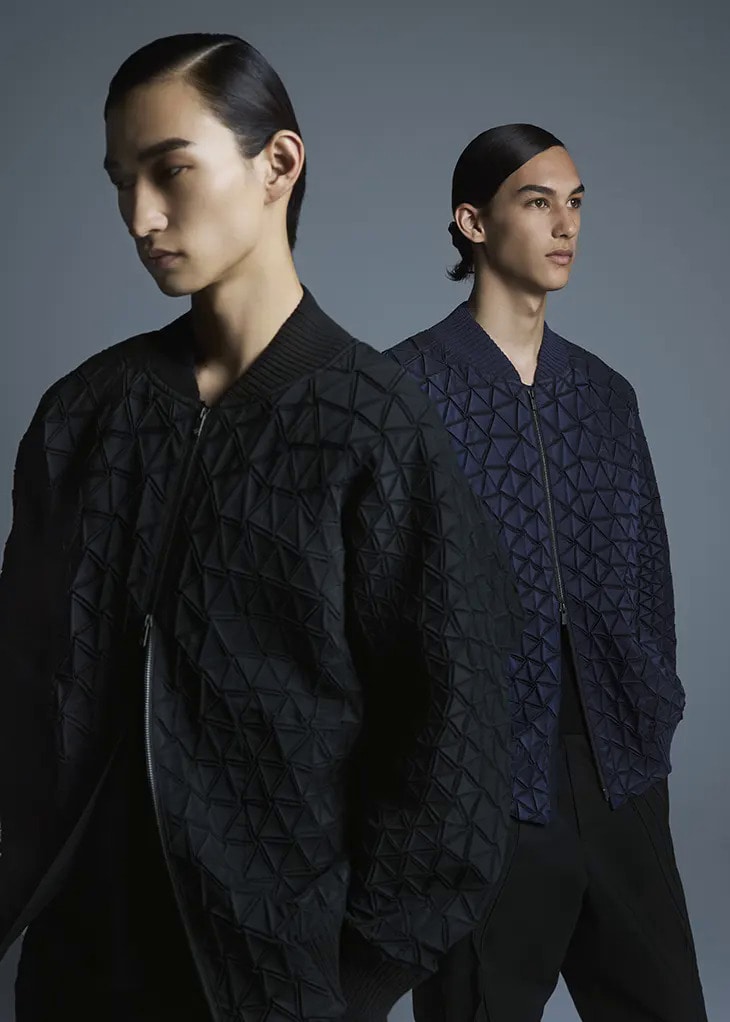
Issey Miyake’s experimental division, A-POC ABLE, has unveiled a breakthrough in programmable clothing with its latest collaboration: the 'TYPE-V Nature Architects' project. Developed with Tokyo-based firm Nature Architects, the highlight is a blouson jacket crafted from heat-responsive metamaterials.
Flat when manufactured, the garment transforms into a pleated, three-dimensional silhouette when exposed to steam. The effect is achieved using algorithmic design embedded into the textile’s structure -- eliminating sewing and reducing production waste. The jacket’s morphing quality allows the fabric to spring into pre-configured shapes without mechanical input.
This design-forward innovation speaks to Miyake’s enduring legacy of merging fashion and science. The piece marks a new standard for adaptive apparel, positioned at the intersection of art, engineering, and sustainability. It’s part of a broader industry movement toward responsive textiles and minimal-material construction.
Image Credit: Issey Miyake
Key Themes Behind This Trend
- Shape-shifting Fashion
- The emergence of garments that morph through external stimuli like steam presents novel design possibilities and redefines functional fashion.
- Algorithmic Textile Design
- Utilizing algorithms for fabric structuring can revolutionize garment construction by minimizing waste and enhancing customization.
- Sustainable Adaptive Apparel
- The movement towards adaptive clothing made with minimal materials signals a shift towards eco-conscious production methods in apparel.
Where This Applies
- Fashion Technology
- Marrying technology with textiles heralds a new era for the fashion sector where garments are not only designed but also programmed.
- Material Science
- Advancements in metamaterials offer transformative potential for industries designing products that require dynamic, responsive capabilities.
- Sustainable Manufacturing
- Innovations in creating garments with reduced waste highlight the growing importance of environmentally responsible production practices.