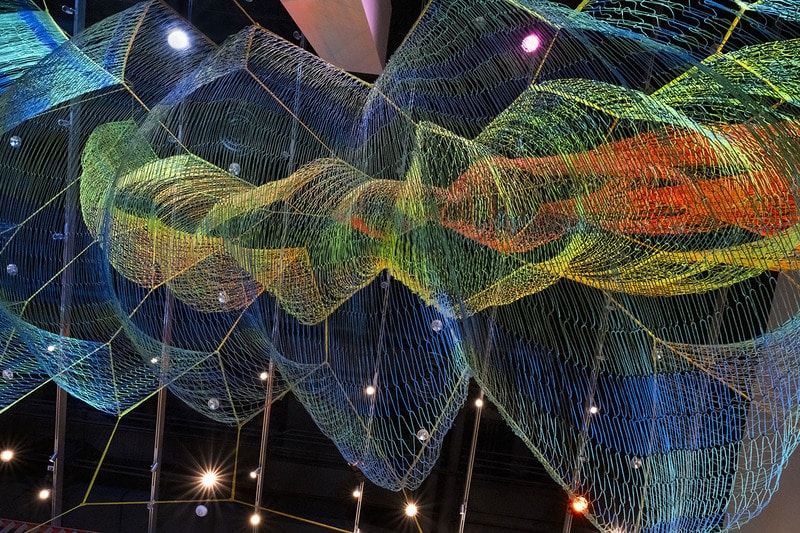
Remembering the Future at the MIT Museum explores humanity’s shared environmental path through an expansive textile installation by artist Janet Echelman. Suspended within the museum’s atrium, the woven sculpture traces climate patterns from the last ice age to potential future scenarios, shifting in color from deep blues to vibrant reds. Its undulating form evokes both fragility and resilience, prompting reflection on how time, data, and design intertwine to visualize planetary change.
Developed in collaboration with architect-engineer Caitlin Mueller and scientists from the MIT Lorenz Center, the installation translates climate models into art that moves gently with air currents. Interactive screens nearby allow visitors to engage with the research behind the piece, turning complex science into accessible experience. Through this union of technology and material, Remembering the Future transforms data into emotion, inviting collective awareness of the planet’s unfolding story.
Image Credit: MIT Museum
What's Driving This Trend
- Data-driven Art
- Art installations that visualize complex scientific data offer immersive experiences, engaging audiences emotionally with environmental issues.
- Interactive Exhibits
- Museums are embracing interactive technology to enhance visitor engagement, allowing for a deeper understanding of scientific research through personal exploration.
- Climate-responsive Designs
- Designs that respond to environmental changes through adaptive color and form demonstrate innovative ways to highlight and address climate issues.
Who This Affects Most
- Museums and Cultural Institutions
- Cultural spaces are innovating with interactive and tech-infused exhibits to make complex subjects like climate science more relatable to the public.
- Environmental Communication
- This field benefits from creative collaborations that transform scientific data into compelling visual narratives, making critical environmental issues more comprehensible.
- Art and Technology Integration
- The intersection of art and technology offers a fertile ground for new storytelling methods, particularly in communicating urgent topics like climate change.