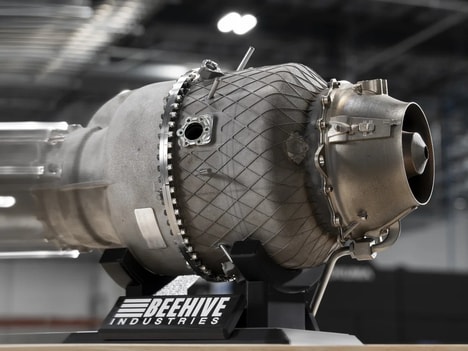
Alloyed is moving small turbojet propulsion toward quicker custom builds for drone makers with a workflow that links digital modeling, metal 3D printing and computer-controlled machining. The Oxford, U.K., company can turn a base design into a flyable engine in roughly two months, and its 300-N engine has already flown and reached customers earlier this year.
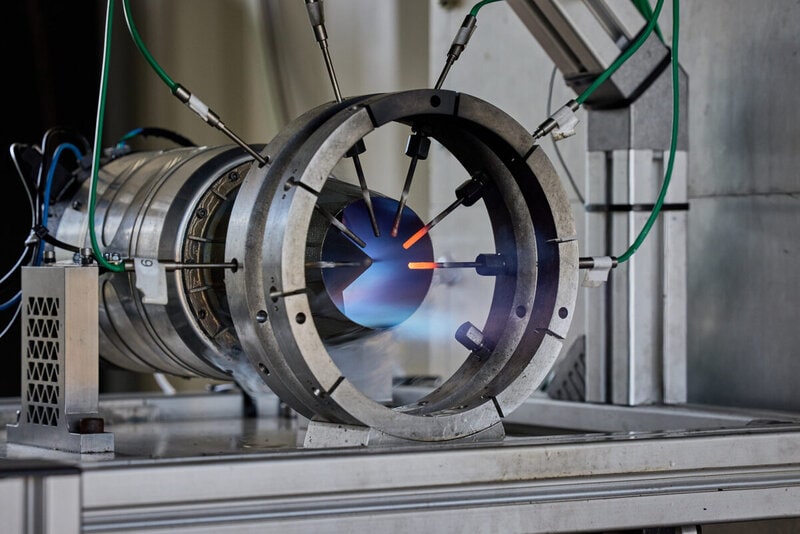
Production is rising on a 3-kilogram engine rated at 300 Newtons of thrust. Bench testing is underway on a 1,100-N version targeted for production by year-end. With digital tooling, engineers can update parts through simulation, stand tests and flights near Oxford without being locked into fixed tooling.
A two-month path from adapted design to flight-ready hardware turns engine sourcing into a faster cycle for drone builders, especially on one-way aircraft where cost and quick revisions matter. Digital tooling also broadens the pitch to reusable reconnaissance and other longer-range drones with mission-specific propulsion.
Image Credit: Aerospace America
What's Driving This Trend
- 3d-printed Propulsion
- Metal additive manufacturing enables compact turbojet components to be redesigned and produced quickly, reshaping how drone engines move from concept to flight-ready hardware.
- Rapid Engine Customization
- Digital modeling and simulation-driven iteration create shorter development cycles for mission-specific propulsion systems tailored to emerging unmanned aircraft needs.
- Tooling-free Manufacturing
- Flexible production workflows reduce reliance on fixed tooling, allowing propulsion designs to evolve with testing data, customer requirements and shifting operational use cases.
Who This Affects Most
- Drone Manufacturing
- Faster access to custom turbojets supports new classes of long-range, one-way and reconnaissance drones with differentiated performance profiles.
- Additive Manufacturing
- Advanced metal printing gains relevance as a production pathway for high-performance aerospace parts requiring speed, precision and design flexibility.
- Aerospace Propulsion
- Small turbojet development is becoming more modular and digitally optimized, opening space for specialized suppliers outside traditional engine manufacturing models.