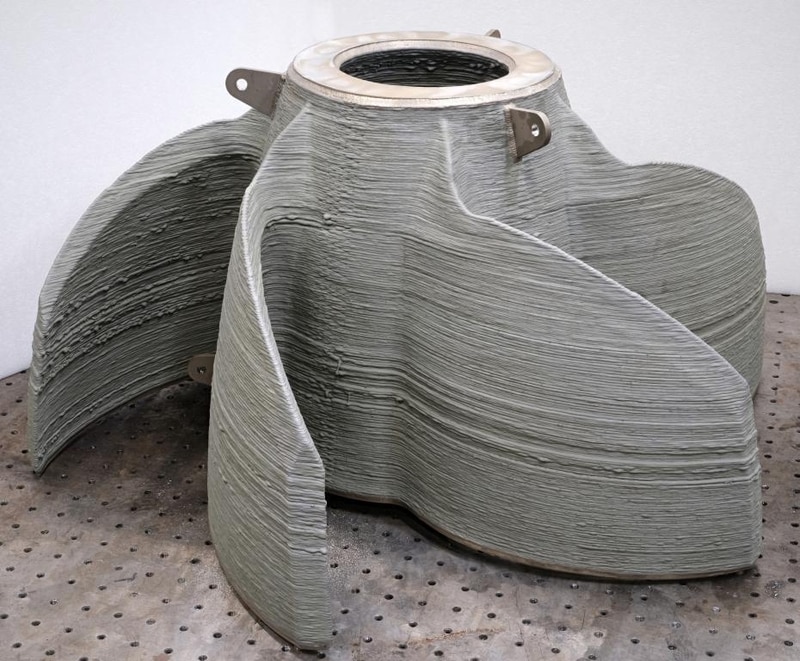
Hybrid advanced manufacturing is reshaping industrial production by combining additive manufacturing with established metal fabrication processes. Researchers at Oak Ridge National Laboratory developed a method that uses 3D printing to create custom canisters for powder metallurgical hot isostatic pressing (PM-HIP), a process used to manufacture large, high-performance metal components. By replacing traditional forming, machining, and welding steps with printed canisters, manufacturers can create more complex geometries, reduce material waste, and shorten production timelines. The approach is particularly valuable for industries such as aerospace, energy, hydropower, and nuclear power, where component reliability is critical.
This development highlights a growing shift toward integrating multiple manufacturing technologies into a single workflow. Combining digital fabrication with advanced metal processing enables greater design flexibility while improving efficiency and supply chain resilience. As demand grows for specialized, large-scale components, hybrid production methods may help manufacturers accelerate development, reduce costs, and strengthen domestic industrial capabilities.
Image Credit: Fred List III/ORNL, U.S. Dept. of Energy
What's Driving This Trend
- Hybrid Manufacturing Integration
- A unified workflow that combines additive and subtractive metal processes enabling complex geometries, reduced waste, and compressed lead times for large-scale parts.
- Printed Canister-enabled PM-HIP
- Custom 3D-printed canisters for PM-HIP facilitating consolidation of formation and finishing steps and unlocking novel internal architectures in high-performance components.
- Digital-to-metal Workflow Convergence
- Seamless digital design-to-metal production pipelines increasing supply-chain resilience and enabling localized, responsive manufacturing of specialized alloys.
Who This Affects Most
- Aerospace
- The requirement for lightweight, complex, and certifiable structures creates pathways for hybrid methods to deliver optimized, low-defect components at scale.
- Energy Generation
- Legacy turbine and rotor fabrication processes become subject to redesign toward integrated additive-and-HIP manufacturing that reduces material waste and extends part life.
- Nuclear Power
- High-reliability components with intricate internal cooling channels and stringent metallurgical control present a market for hybrid production that enhances domestic manufacturing capability.