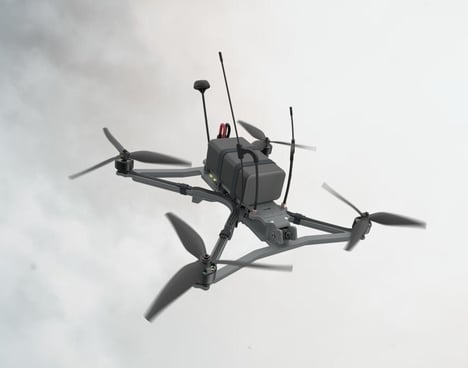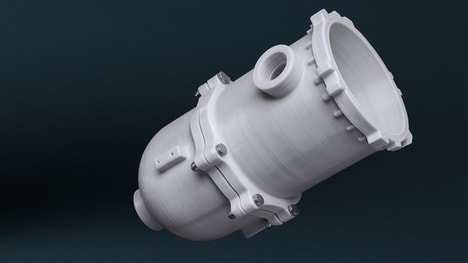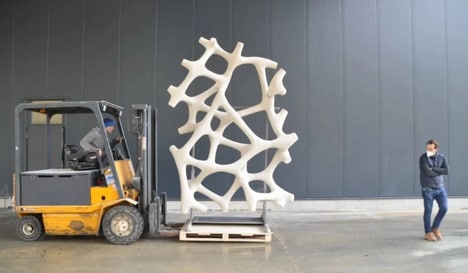

Firestorm Labs introduced its xCell containerized additive manufacturing units, portable production systems designed to bring industrial 3D printing directly to expeditionary and forward-deployed environments. The company recently secured an $82 million Series B round alongside Pentagon funding through the APFIT program, including plans to deliver multiple xCell systems to an undisclosed customer in the Indo-Pacific region.
The xCell platform combines modular additive manufacturing hardware, environmental controls and workflow software inside deployable containerized units capable of producing components closer to operational theaters. Firestorm Labs positioned the system around distributed manufacturing and supply-chain resilience, supporting both polymer and metal production for military sustainment and rapid replacement-part manufacturing.
For defense operators and logistics planners, containerized manufacturing could reduce dependence on long supply chains while improving adaptability and repair speed in contested environments. The rollout reflects a broader military shift toward commercially driven, deployable production infrastructure intended to support scalable and responsive sustainment operations.
Image Credit: Firestorm Labs
What's Driving This Trend
- Containerized Additive Manufacturing
- Portable, self-contained 3D printing units enable on-site production of parts and tools, disrupting centralized factory dependence by enabling localized, just-in-time manufacturing capability.
- Distributed Supply-chain Resilience
- Shifting production capacity closer to operational theaters reduces vulnerability to long logistics lines and creates resilient, multi-node supply networks that can maintain critical readiness under disruption.
- Expeditionary Production Software
- Integrated workflow and environmental-control software within deployable units streamlines remote qualification and repeatability of parts, transforming how production is managed in austere or contested environments.
Who This Affects Most
- Defense Logistics
- Field-deployable manufacturing capabilities could radically shorten repair timelines and lower inventory requirements, altering sustainment models for forward-deployed forces.
- Aerospace and Maritime Maintenance
- On-site additive production offers the potential to produce mission-critical components at remote bases or aboard ships, reducing aircraft and vessel downtime due to part scarcity.
- Remote Energy and Mining Operations
- Deployable production pods present opportunities to fabricate specialized replacement parts on location, minimizing costly operational halts and long lead times for remote installations.