
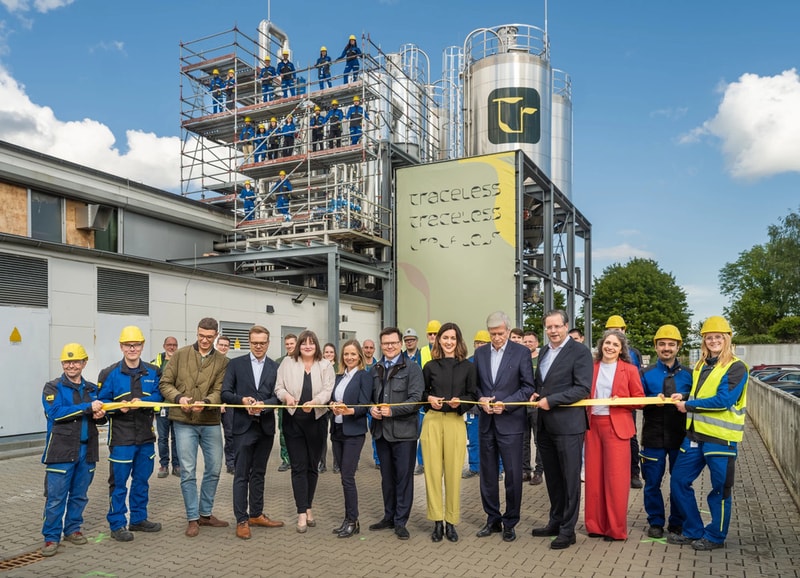
Traceless introduced its first industrial production facility for Traceless Natural Polymer, a bio-based and home-compostable material designed to replace fossil-derived plastics in packaging and single-use applications. Located in Hamburg, the facility processes agricultural plant-based residues into granulates using the company’s proprietary extraction technology, which preserves the natural polymer structure without chemical modification.
The plant has an annual production capacity of roughly 3,000 tonnes and is designed to support customers including Mondi, OTTO and Biesterfeld. Traceless said the material can be processed using standard industrial equipment and is suitable for packaging, coatings and adhesive applications where conventional recycling is difficult. According to the company, the production process reduces CO2 emissions by 91% compared with traditional plastics.
For brands and consumers, the new facility expands access to compostable packaging alternatives while supporting circular bioeconomy goals and reducing reliance on fossil-based plastic materials.
Image Credit: Traceless
What Makes This Trend Stand Out
- Bio-based Circular Polymers
- Widespread adoption of plant-derived polymers creates potential for materials that close loops between agriculture and packaging while significantly lowering lifecycle emissions.
- Industrial-scale Compostable Materials
- Scaling compostable polymer production to industrial volumes enables mainstream substitution of single-use plastics across mass-market packaging systems.
- Residue-to-granulate Processing
- Converting agricultural residues into ready-to-process granulates introduces cost-efficient feedstock pathways that preserve polymer integrity without chemical alteration.
Sectors Adopting This
- Packaging and Coatings
- Availability of compostable polymers compatible with standard equipment offers brands novel material choices that reduce reliance on fossil-based films and coatings.
- Adhesives and Sealants
- Natural polymer chemistries tailored for adhesion create opportunities for formulating compostable bonding systems for disposable products and labels.
- Waste Management and Composting
- Expansion of compostable material volumes shifts demand toward end-of-life infrastructure capable of industrial and home composting, changing sorting and processing flows.