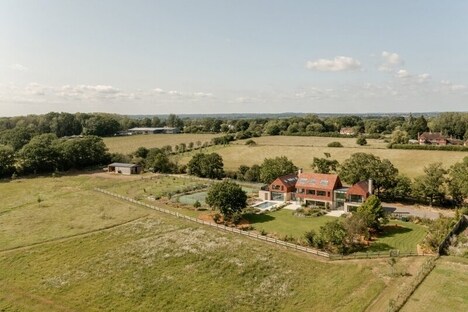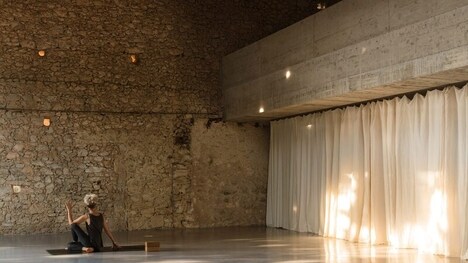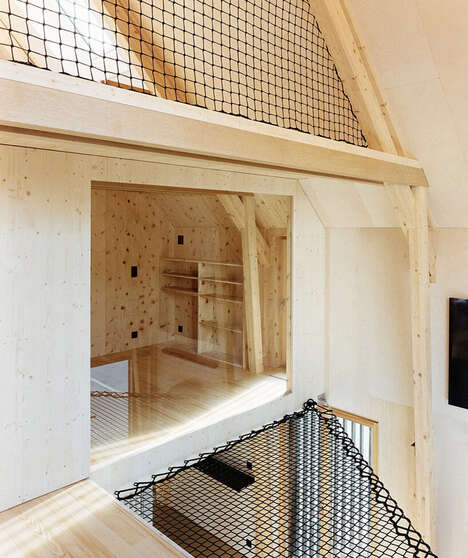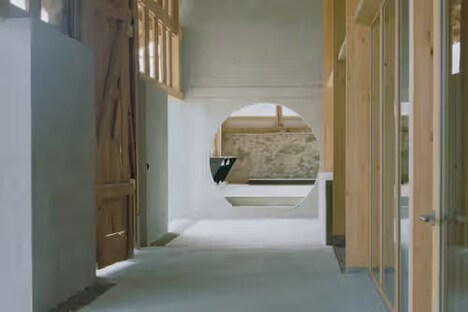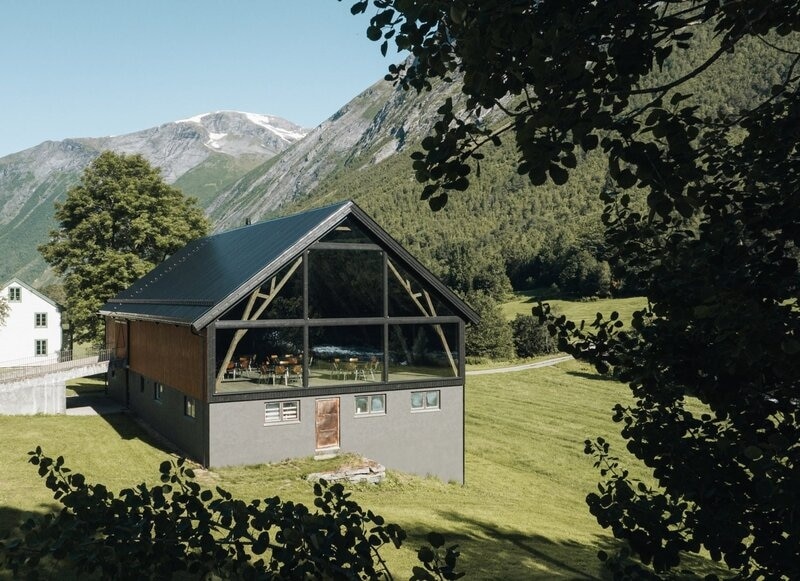
The Office Inainn barn conversion in Norway transforms heritage into a layered dining destination by adapting a historic timber structure into the new Nikkaskjøkken restaurant and spa. Instead of replacing the original framework, the architects carefully inserted a new core within the barn, maintaining its character while adding modern functions. The restaurant occupies the third floor, where a wood-burning fireplace anchors the space, combining contemporary comfort with rustic atmosphere. The result is a project that respects the past while accommodating new uses.
Part of a broader rehabilitation of the surrounding farm complex, the conversion honors the memory of Nikka Grønnings, a local figure whose legacy informs the site. By integrating dining and hospitality into an existing rural landmark, the design strengthens ties to regional history while enriching tourism. Office Inainn demonstrates how adaptive reuse can preserve context and narrative, creating architecture that bridges heritage with forward-looking purpose.
Image Credit: Mathias Sæther
What Makes This Trend Stand Out
- Adaptive Reuse Architecture
- The transformation of historic structures into modern venues illustrates a trend in architecture that values preservation and innovation, opening avenues for sustainable development.
- Heritage-inspired Hospitality
- Integrating regional history into dining and hospitality experiences is increasingly popular, offering unique cultural tourism opportunities that emphasize local narratives.
- Layered Dining Experiences
- The combination of rustic and modern elements in dining spaces is gaining traction, providing guests with multifaceted experiences that blend comfort with cultural heritage.
Sectors Adopting This
- Hospitality
- The hospitality industry can expand its offerings by utilizing adaptive reuse, creating distinctive travel destinations that appeal to heritage-minded tourists.
- Architecture
- Architecture firms are exploring the potential of reimagining ancient structures into functional spaces, which aligns with sustainable design and conservation efforts.
- Tourism
- The tourism sector can leverage heritage sites for new hospitality projects, enhancing local economies through cultural preservation and modern visitor experiences.