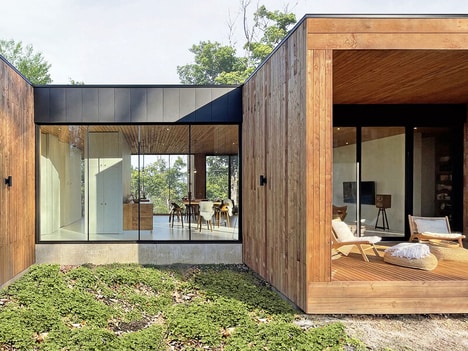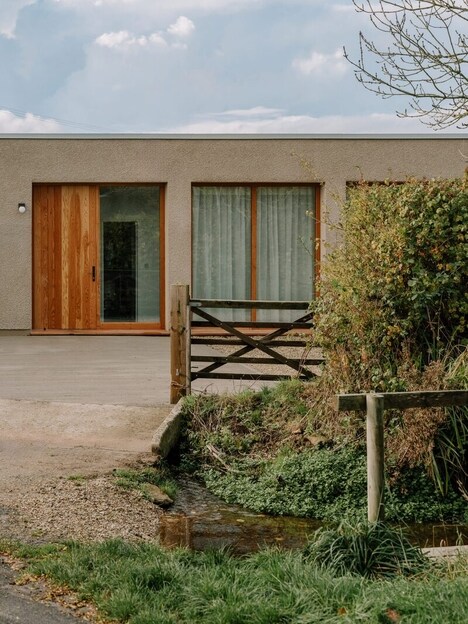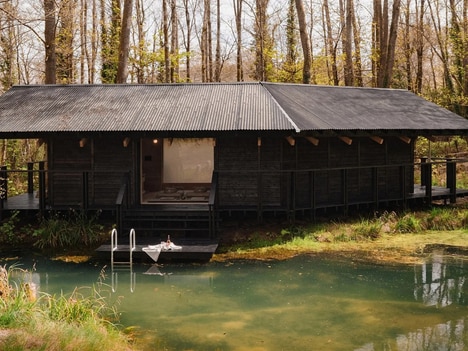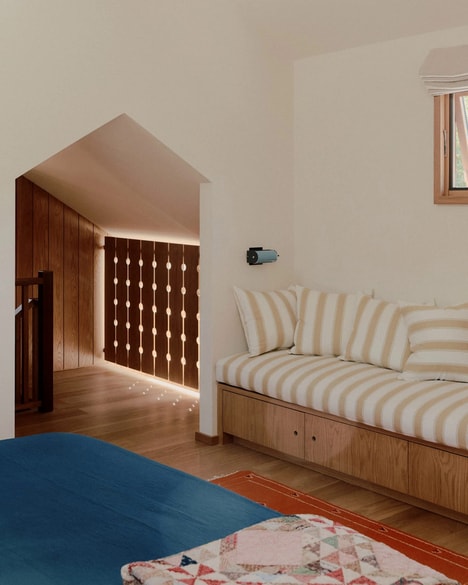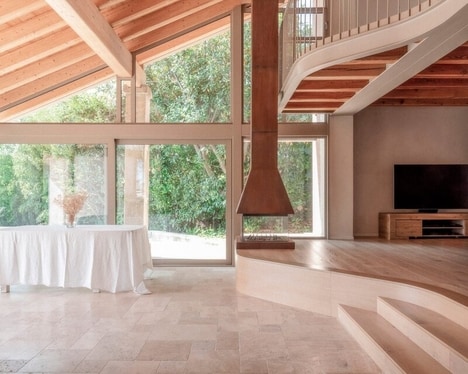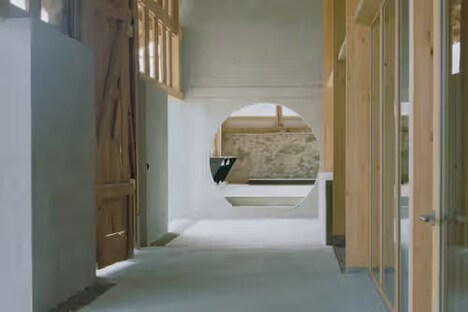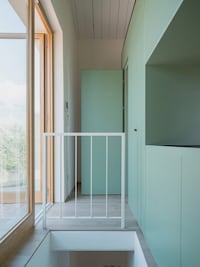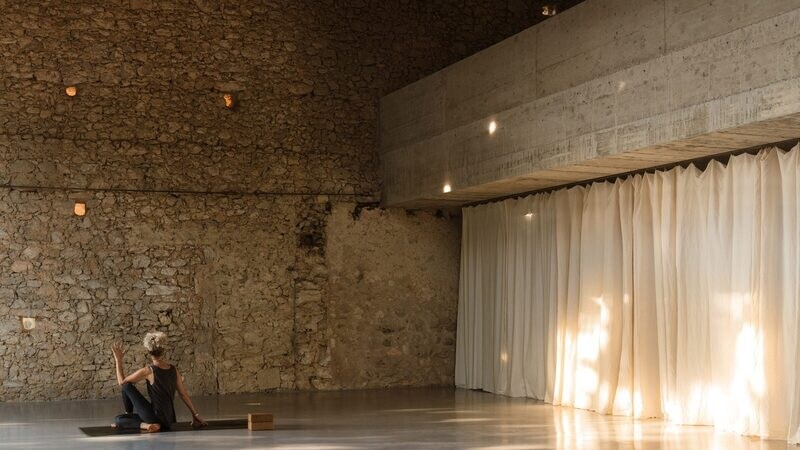
The Amassa retreat, designed by Bindloss Dawes, transforms a cluster of 300-year-old farm buildings in southwest France into a peaceful wellness destination. At its center is a timber and stone barn, stabilized with modern concrete supports and opened up with sweeping west-facing views toward the Pyrenees. Natural light floods the interior, where a suspended mezzanine and subtle finishes create a calm, open space for yoga and community.
Surrounding structures, including a former bakery, piggery, and tractor shed, have been gently restored into accommodations, studios, and gathering spaces. The Amassa retreat blends traditional preservation with modern interventions, using elements like high-performance glazing and radiant flooring to maintain comfort while honoring the site’s rural heritage. The result is a restorative escape rooted in slowness, connection, and quiet luxury.
Image Credit: Bindloss Dawes
What Makes This Trend Stand Out
- Rural Heritage Modernization
- Blending traditional preservation with contemporary features offers luxury retreats that respect historical architecture.
- Adaptive Reuse in Wellness
- Transforming agricultural structures into wellness spaces demonstrates innovative solutions in the adaptive reuse of historic buildings.
- Integration of Nature and Architecture
- Creating restorative environments by enhancing structures with panoramic views and natural light showcases holistic design approaches.
Sectors Adopting This
- Wellness Tourism
- Developments that incorporate history and wellness can position regions as unique destinations in the burgeoning wellness tourism sector.
- Sustainable Architecture
- Emphasizing energy-efficient designs in the renovation of historic buildings advances the sustainable architecture field.
- Heritage Real Estate
- The conversion of ancient estates into luxury accommodations attracts niche markets within the heritage real estate industry.