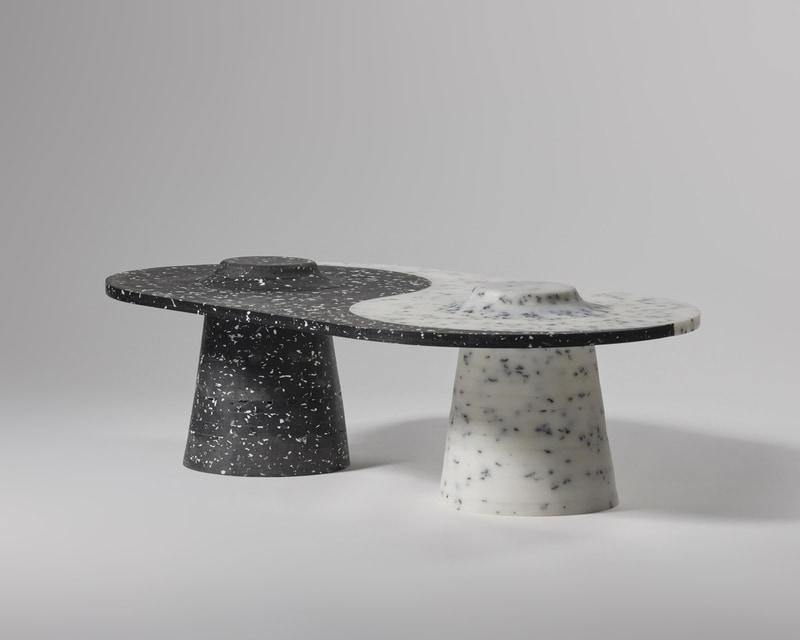
Lawrence Technological University presents a series of furniture, lighting, and interior objects created from 100% recycled HDPE made with post-consumer plastic, including discarded milk crates. Developed by six sophomore Product Design students in the university's Sustainable Systems course, the collection was produced in partnership with Michigan-based manufacturer Design Declassified and supported by the Centrepolis Accelerator. The projects demonstrate different approaches to shaping the shared material into functional objects while diverting approximately 1,300 pounds of plastic waste from landfill through furniture and lighting production.
The exhibition received the Best of Schools award at the WANTED Schools Showcase during ICFF and featured projects including a room divider, coffee table, lamps, and modular puzzle pieces. Students experimented with CNC waste, heat forming, kerf cutting, and recycled sheet fabrication to achieve different structures and finishes while working from the same material palette. Rather than combining work from multiple courses, the display consisted entirely of projects completed within a single undergraduate class.
Image Credit: Steve Kroodsma, LTU
What's Driving This Trend
- Recycled-material Furniture
- Post-consumer plastics are being transformed into durable home and office furnishings, creating space for premium design products built around visible sustainability.
- Circular Design Education
- University-led product design programs are becoming applied innovation labs where students prototype scalable circular solutions with real manufacturing partners.
- Waste-to-interior Objects
- Discarded HDPE and other plastic streams are gaining new value as lighting, dividers, tables, and modular decor for environmentally conscious interiors.
Who This Affects Most
- Furniture Design
- Sustainable material experimentation is reshaping furniture production with recycled plastics that offer distinctive textures, forms, and brand differentiation.
- Higher Education
- Design schools are expanding their role in commercialization ecosystems by linking coursework with accelerators, exhibitions, and manufacturing collaborations.
- Plastics Recycling
- Advanced fabrication methods such as CNC machining, heat forming, and sheet production are opening higher-margin uses for post-consumer plastic waste.