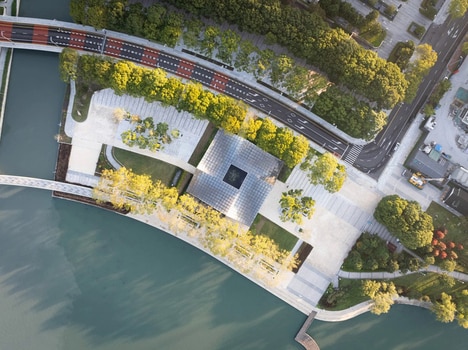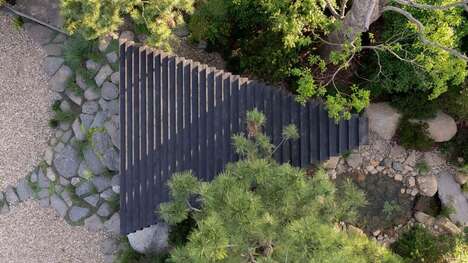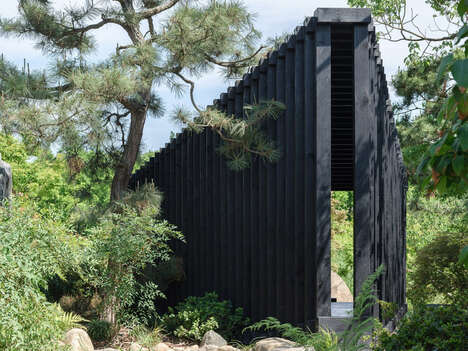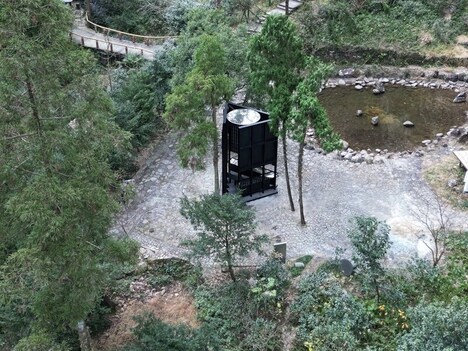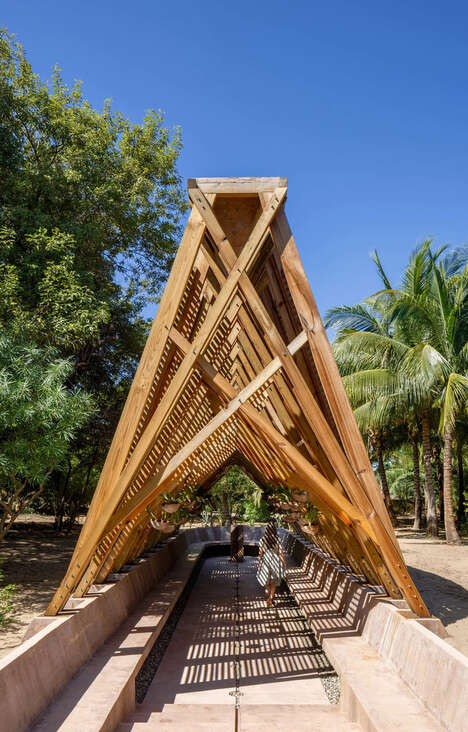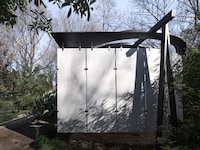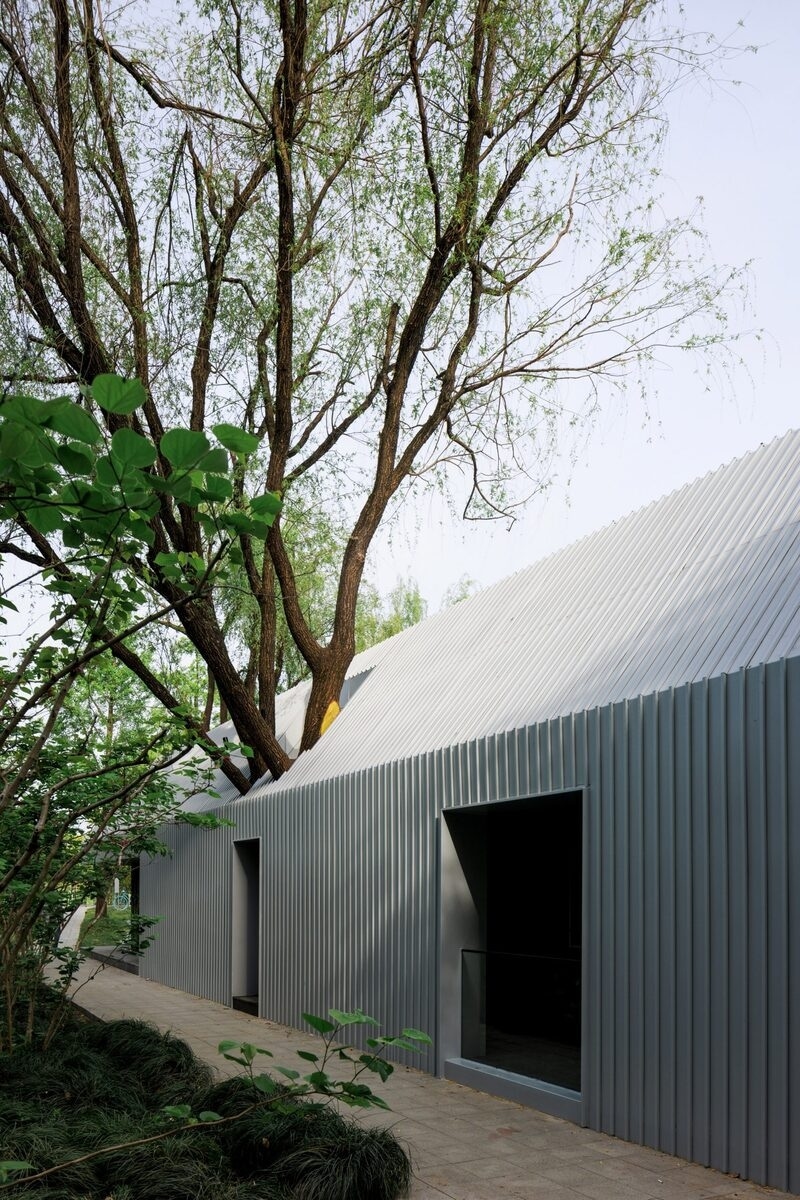
The Lake House Life Experience Pavilion by Wutopia Lab introduces a contemplative space on a former waterfront base in Daning Park, Shanghai. Designed under tight ecological constraints, the pavilion reimagines two existing structures as a “house within a house”: one wrapped in a metal skin for climate control, the other in recycled ceramic panels for expressive force. Built in just 40 days, this dual-envelope strategy blends modular construction, recycled materials, and precision coordination to deliver architectural serenity through minimal intervention.
The pavilion unfolds as a horizontal narrative: through preserved trees, an entry lobby, exhibition halls, VIP rooms, a willow colonnade, terrace, boardwalk, and café—inviting slow circulation and sensory discovery. Materials range from marine-plastic plaster and mushroom leather to glazed ceramics and vertical greenery. The layered layout dissolves boundaries between inside and out, offering moments of spatial clarity achieved without spectacle. An evocative feature: a pearlescent ceramic wall that invited an elderly visitor to pause and reflect—a defining moment in the pavilion’s poetic design.
Image Credit: Liu Guowei
What Makes This Trend Stand Out
- Sustainable Architecture
- The development emphasizes the incorporation of recycled materials and eco-friendly construction practices, highlighting a shift toward environmentally conscious building designs.
- Modular Construction Techniques
- The project's assembly within just 40 days showcases the potential of modular construction methods, enabling rapid and efficient building processes while maintaining high-quality standards.
- Nature-integrated Design
- By blending natural elements with architectural features, this trend invites a harmonious interaction between the built environment and its natural surroundings, promoting wellness and tranquility.
Sectors Adopting This
- Green Building Materials
- The use of innovative materials like marine-plastic plaster and mushroom leather is revolutionizing the green building materials industry with sustainable and durable alternatives.
- Urban Park Development
- As urban spaces increasingly incorporate serene environments within city landscapes, this industry sees new opportunities in creating multipurpose pavilions and structures that enhance public parks.
- Modular Building Industry
- With the success of prefabricated components, modular building solutions are becoming more prominent, reducing construction timelines and costs in diverse architectural projects.