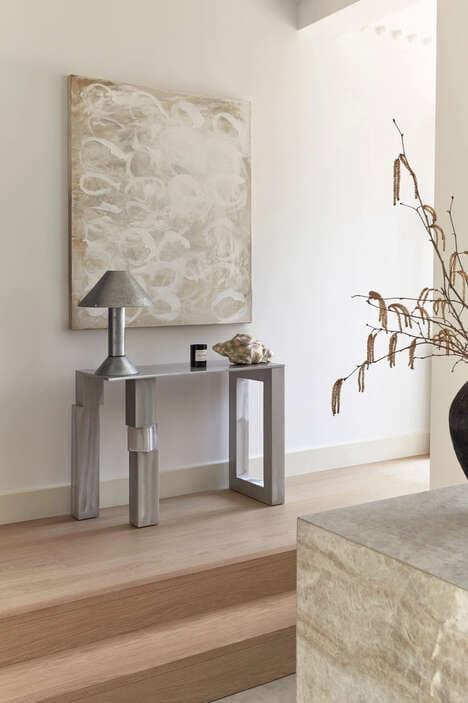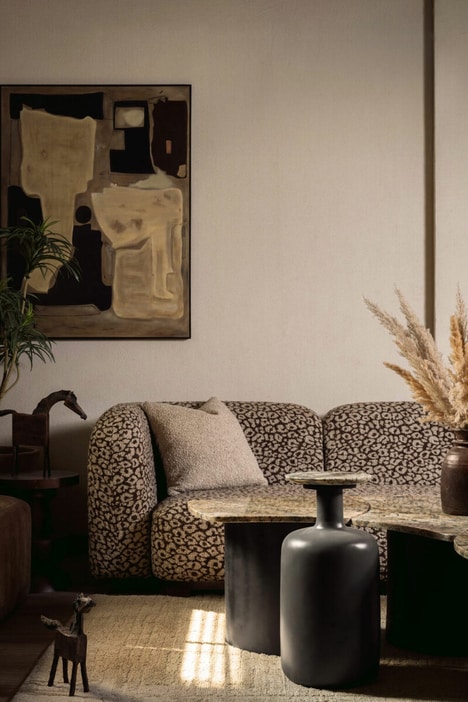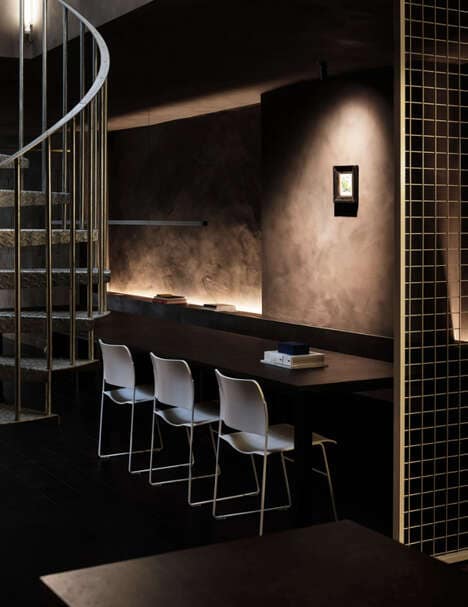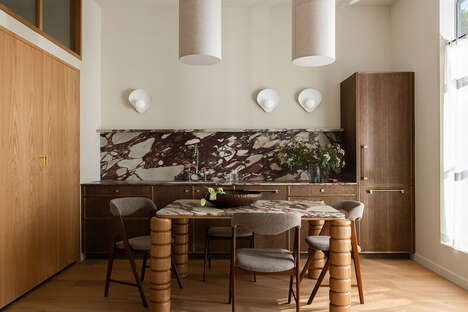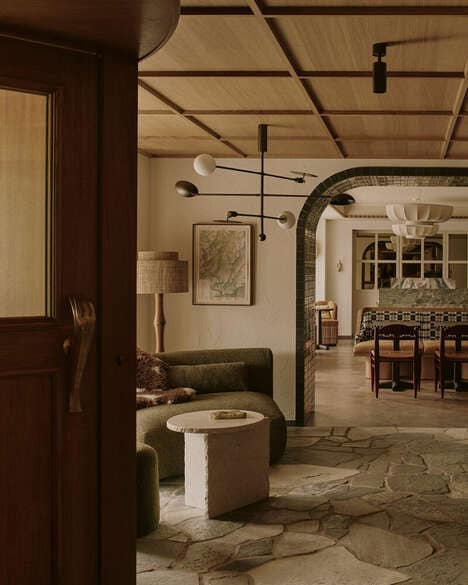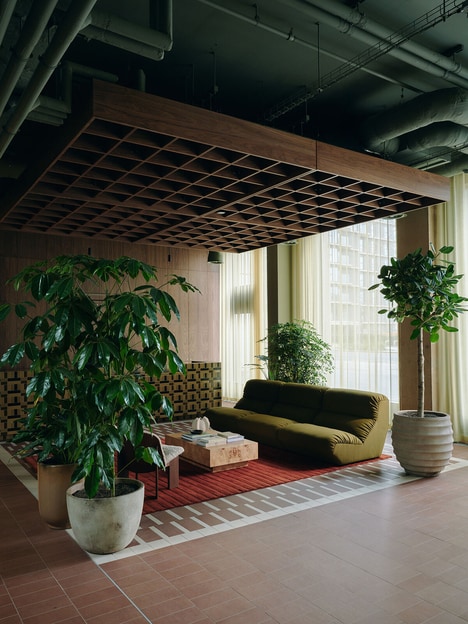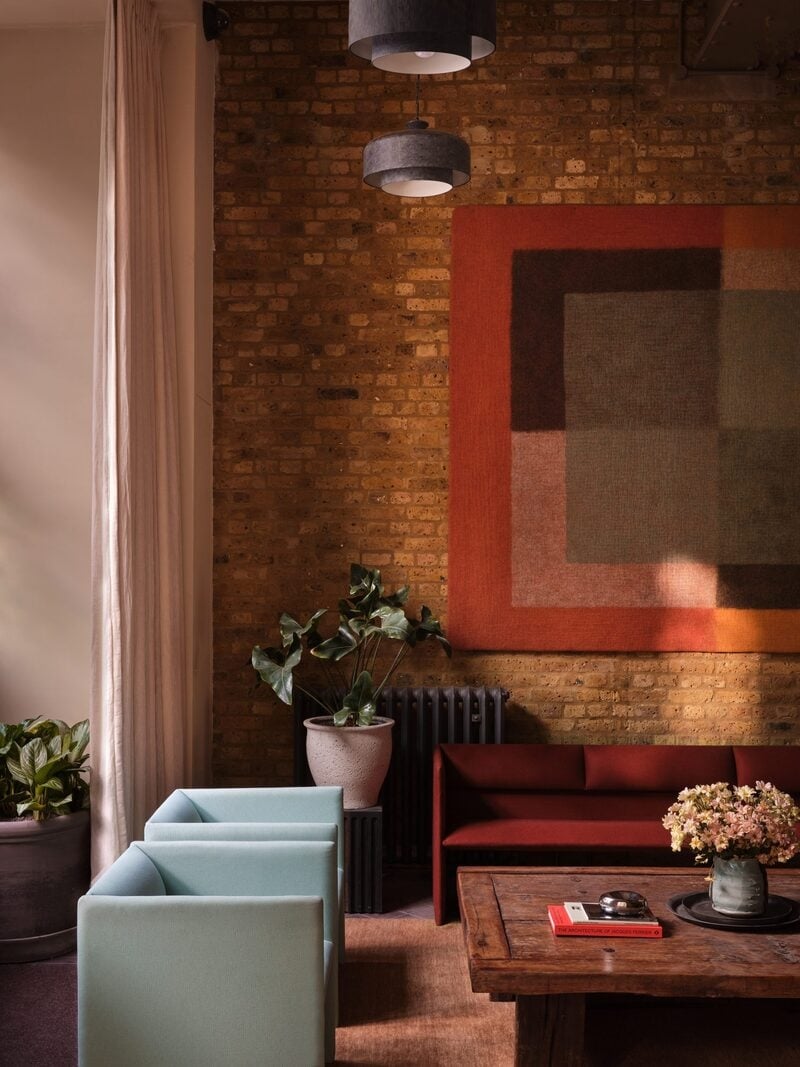
Daytrip’s Cloisters interiors blend period architecture with modern furniture design. Housed in an east London building with a rich past, the project reimagines the workspace as a meeting point between heritage and contemporary life. Original features such as brick archways, timber beams, and iron detailing are preserved, while new furnishings provide sculptural contrasts. Carefully chosen pieces anchor each corner with character, turning working zones into a series of thoughtful environments that encourage focus and informal exchange. The atmosphere balances authenticity with comfort, showing how an adaptive approach can breathe new energy into existing fabric.
The design narrative highlights how modern objects can enhance rather than overshadow history. Daytrip uses muted colors and natural textures to soften transitions between eras, allowing vintage qualities to coexist with crisp, modern silhouettes. Generous glazing and reflective materials further amplify natural light, ensuring the workspace feels open and connected despite its age. The result is a workplace that moves beyond simple renovation, presenting a living dialogue between past architecture and present creativity, while positioning Cloisters as a model for adaptive reuse that feels timeless rather than trend-driven.
Image Credit: Simon Bevan
What Makes This Trend Stand Out
- Heritage-modern Hybrid Workspaces
- The blend of historical architectural features with contemporary design elements offers a unique workspace environment that fosters creativity and innovation.
- Adaptive Reuse in Office Design
- Transforming historic buildings into functional workspaces presents opportunities to conserve cultural heritage while meeting modern business needs.
- Sustainable Workspace Design
- Utilizing existing structures for office spaces supports sustainability goals by minimizing new construction and preserving valuable resources.
Sectors Adopting This
- Interior Design and Architecture
- The growing demand for spaces that integrate historical elements with modern aesthetics is reshaping design approaches in this sector.
- Real Estate Development
- Developers stand to gain by repurposing historic properties into sought-after workspaces, tapping into the rising trend of unique office environments.
- Sustainable Construction
- Emphasizing adaptive reuse within construction practices aligns with environmental efforts and promotes innovative methods in building renovation.