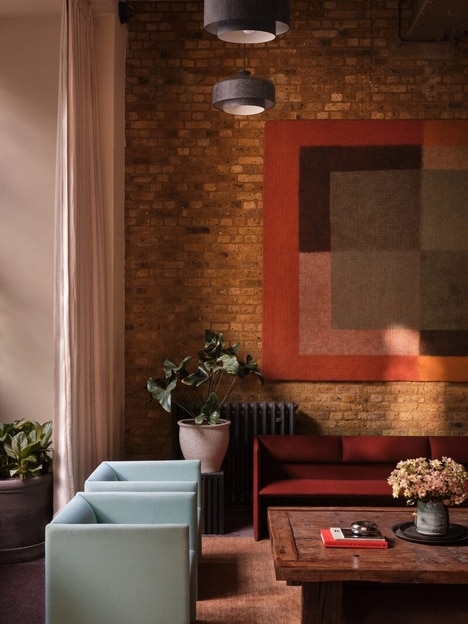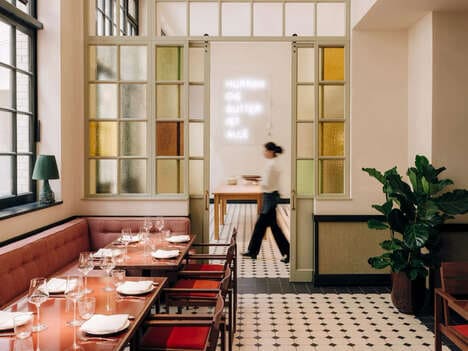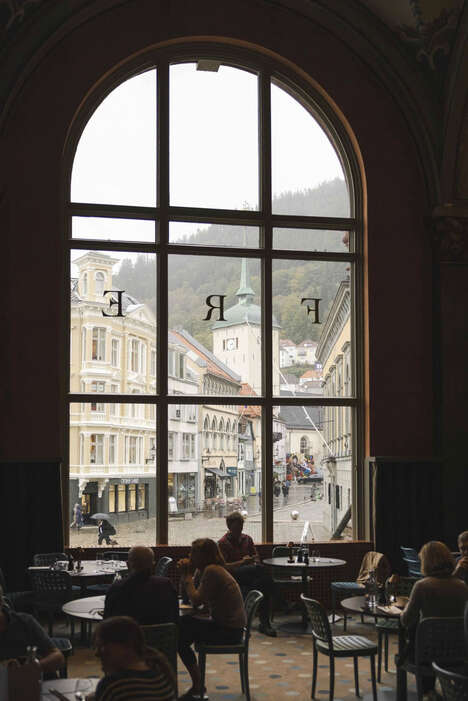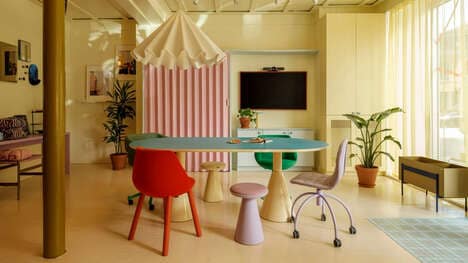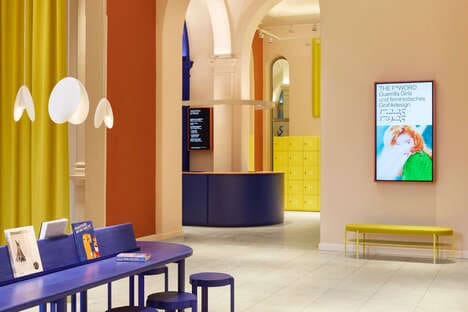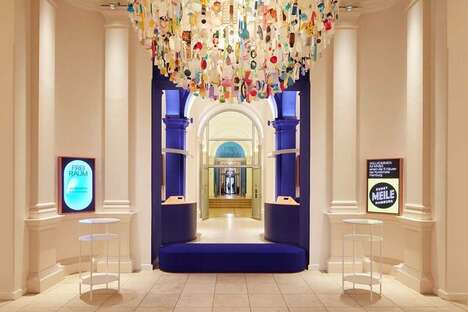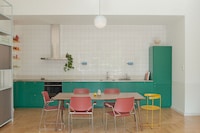
The Volkshaus Basel in Switzerland is a building that has served many functions over the years, and the recent redesign by the architects of Herzog & de Meuron will continue this tradition.
The building has had many uses, starting “as the Castle of Bailiwick, later People’s House Basel, then a brewery and concert hall in 1874, and after that the building functioned as a central meeting place for political, social and cultural activities.”
With such a rich history to work with, Herzog & de Meuron infused the redesign with historical references like wallpaper made from 17th century etchings, all new seating designed after the original chairs from the People’s House and included materials that will age beautifully like leather, velvet and wood. This is a stunning example of melding the old and the new.
What Makes This Trend Stand Out
- Neo-historical Interiors
- The fusion of old and new design elements creates an opportunity for sustainable renovation projects.
- Heritage Revitalization
- Preserving historical architecture encourages cultural and social cohesion in urban centers and promotes tourism.
- Sustainable Decor
- The use of natural, long-lasting materials in interiors promotes environmental responsibility and longevity of design.
Sectors Adopting This
- Architecture
- Architects can tap into the trend of neo-historical interiors to create unique designs and attract clients interested in heritage revitalization.
- Interior Design
- Interior designers can incorporate historical design elements into modern spaces for a unique and sustainable aesthetic.
- Tourism
- Historical buildings with neo-historical interiors can become popular tourist attractions and contribute to local economies.