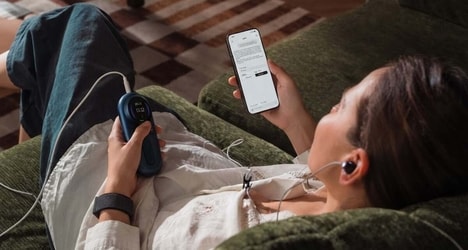
Aurenar raised $5.7 million in seed funding to advance V-Link, an investigational, non-invasive neuromodulation device designed for intensive care patients. The wireless, single-use system delivers transauricular vagus nerve stimulation through the outer ear and recently received FDA Breakthrough Device designation.
V-Link is initially being developed for adults with aneurysmal subarachnoid hemorrhage, where the stimulation is intended to help regulate inflammation and reduce cerebral vasospasm alongside standard clinical care. Aurenar will use the funding to complete device development, conduct verification and validation testing, prepare FDA submissions and advance the technology toward a pivotal clinical trial.
For patients and clinicians, V-Link could add a non-invasive neuromodulation option for managing complications following severe brain hemorrhage. The financing reflects growing investment in evidence-based neurotechnology aimed at improving outcomes in acute and critical care settings.
Image Credit: Aurenar
What Makes This Trend Stand Out
- Non-invasive Neuromodulation
- Wireless stimulation platforms are expanding neurotechnology beyond chronic implants, creating room for acute-care therapies that integrate with standard hospital workflows.
- Critical Care Neurotechnology
- Evidence-based devices for intensive care settings signal a shift toward targeted neurological intervention during high-risk recovery windows.
- Single-use Bioelectronic Devices
- Disposable neuromodulation systems introduce scalable models for infection-sensitive environments where ease of deployment and sterility are central to adoption.
Sectors Adopting This
- Medical Devices
- Breakthrough-designated neurostimulation platforms highlight opportunities for differentiated device categories that bridge electronics, physiology and bedside care.
- Neuroscience Healthcare
- Acute brain injury treatment is becoming a fertile area for technologies that modulate inflammation and vascular complications through peripheral nerve pathways.
- Hospital Technology
- ICU-focused therapeutic tools are reshaping hospital innovation around connected, minimally invasive systems that support clinicians in managing complex neurological patients.