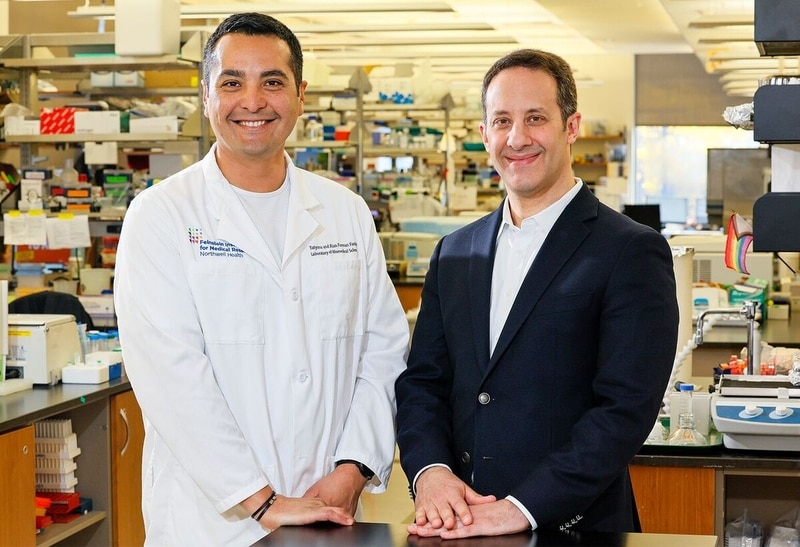
Spark Biomedical, in collaboration with Northwell Health's Feinstein Institutes for Medical Research, has published a first-in-human study in the journal Bioelectronic Medicine. The research has demonstrated that Spark Biomedical's transcutaneous auricular neurostimulation (tAN) platform, a wearable device that stimulates the vagus and trigeminal nerves through the ear, can safely enhance platelet function and engage neural circuits involved in the body's natural clotting response.
The research conducted by Spark Biomedical and Feinstein Institutes provides initial clinical evidence that non-invasive electrical stimulation at the ear can modulate platelet readiness without causing systemic effects or hypercoagulability, with no adverse events reported among healthy subjects. These findings support Spark's Neural Tourniquet program and the development of a novel category of non-pharmacological interventions for managing severe bleeding.
Image Credit: Northwell Health
What Makes This Trend Stand Out
- Wearable Neurostimulation
- Non-invasive ear-based devices point to new therapeutic models where bioelectronic platforms influence physiological responses without drugs or implanted hardware.
- Neural Clotting Control
- Targeting vagus and trigeminal pathways introduces a disruptive path for managing bleeding by activating the body’s own hemostatic signaling mechanisms.
- Drug-free Emergency Care
- Bioelectronic interventions are expanding acute care options by offering portable, non-pharmacological tools for trauma, surgery, and field medicine settings.
Sectors Adopting This
- Bioelectronic Medicine
- Clinical validation of nerve-stimulating wearables strengthens the market for therapies that treat medical conditions through precise electrical modulation.
- Emergency Medicine
- Portable neural tourniquet technologies could reshape bleeding management by providing rapid support before conventional hospital-based interventions are available.
- Medical Wearables
- Therapeutic wearables are moving beyond monitoring into active treatment, creating opportunities for devices that deliver clinically meaningful physiological effects.