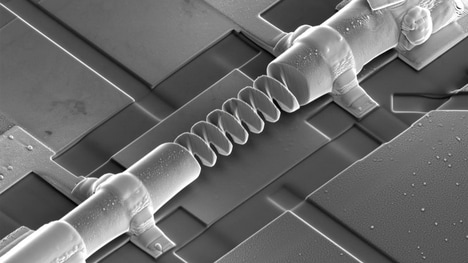
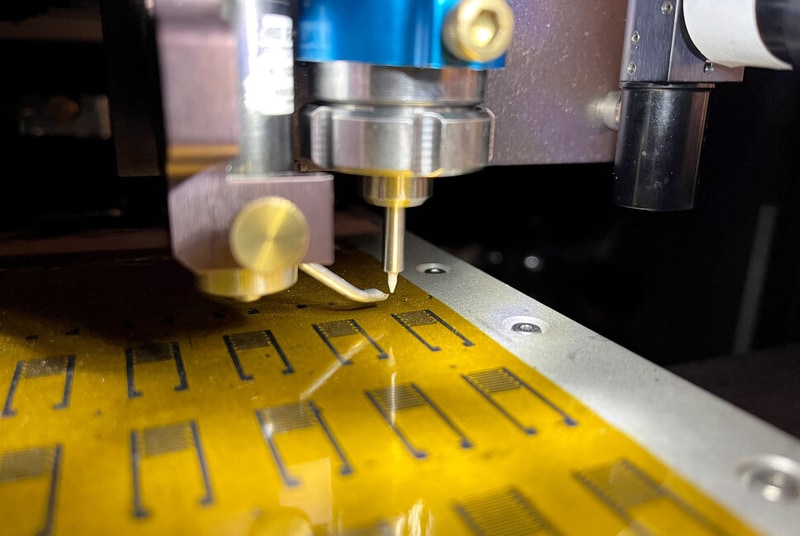
Northwestern’s artificial neurons represent a major step forward in how electronics interact with the human body, enabling devices that can directly communicate with living brain cells. Built using aerosol jet printing, the devices combine molybdenum disulfide (MoS₂) semiconductor inks and graphene conductors on flexible substrates, creating neuron-like electrical spikes through controlled polymer decomposition. These signals closely match the timing and shape of biological neurons, allowing them to successfully activate real neural tissue.
This development could reshape both healthcare and computing industries. Companies in neurotechnology and medical devices can develop more responsive implants for hearing, vision, and movement. At the same time, the ability to replicate complex neural signaling with fewer components supports more energy-efficient hardware, addressing rising AI power demands. This positions early adopters to lead in both advanced medical solutions and next-generation low-power computing systems.
Image Credit: Mark Hersam/Northwestern
Why This Trend Is Growing
- Printed Bioelectronic Neurons
- Integration of aerosol-jet printed MoS₂ semiconductors and graphene conductors produces compact biomimetic signal generators that closely replicate neuronal spike timing and waveform, enabling interfaces with reduced device complexity.
- Energy-efficient Neuromorphic Hardware
- Replicating complex neural signaling with far fewer components suggests computing architectures that significantly lower energy per inference for AI and edge workloads.
- Flexible Implantable Electronics
- Fabrication on bendable substrates and polymer-compatible processes yields conformal devices that preserve mechanical and electrical coupling with soft neural tissue for prolonged integration.
Industries Being Reshaped
- Neurotechnology
- Advanced printed artificial neurons point to prosthetics and closed-loop stimulators capable of precise temporal activation of biological circuits.
- Medical Devices
- Miniaturized biomimetic electronics create possibilities for less invasive implants aimed at sensory restoration and movement assistance with higher signal fidelity.
- Semiconductor Manufacturing
- Incorporation of aerosol jet printing and 2D semiconductor inks represents a shift toward additive, heterogeneous fabrication methods for producing flexible electronics at scale.