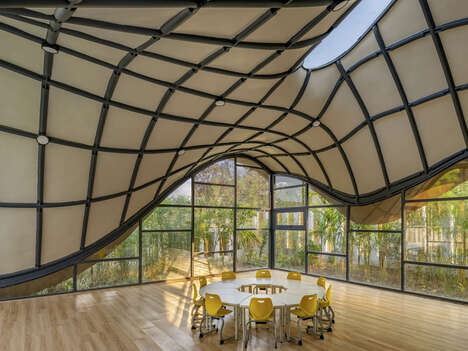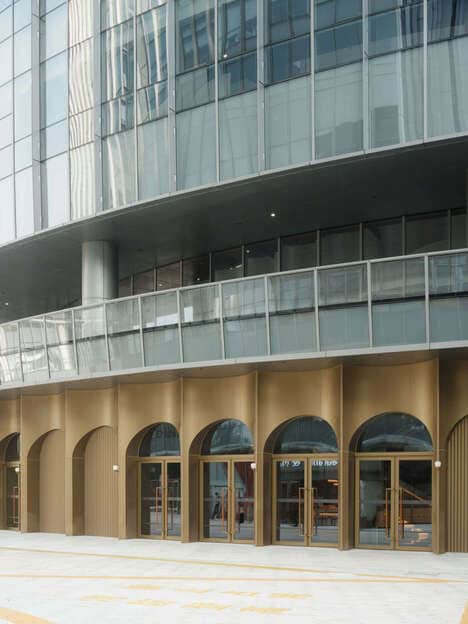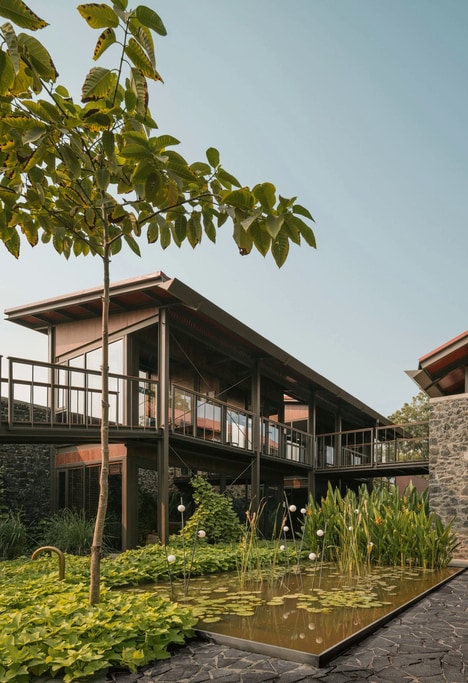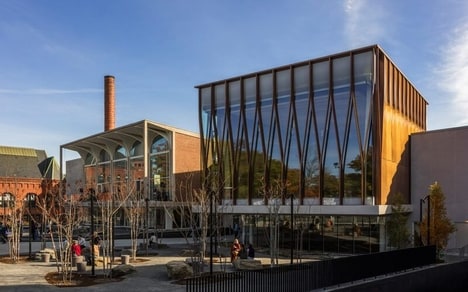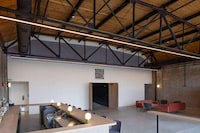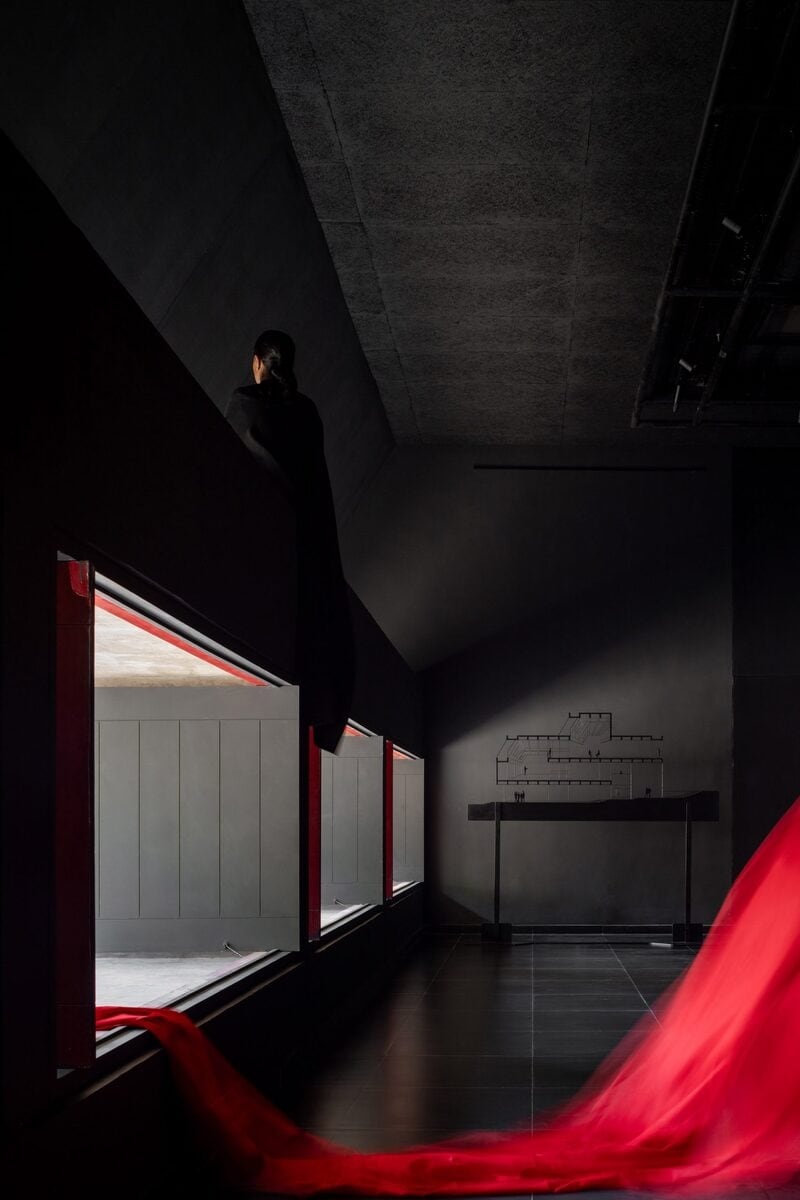
Studio Sangath extends the Urmila Kanoria Black Box theater which was originally designed by Balkrishna Doshi. It is located in Ahmedabad, India for the Kanoria Center for Arts. The facility was constructed in 1984 by Doshi and the concept was led by Indian philanthropist Urmile Kanoria for the past four decades. It is meant to follow the architectural values of Doshi's buildings.
Panthaki Hoof speaks about the project, "The design references the existing studio spaces on campus, adopting their profile while adapting it to suit the needs of a black box environment. Architecturally, it responds to the language of the surrounding buildings constructed in 1984 by aligning with their structural rhythms – matching heights, beam widths and entry points. While the north-facing studio windows are omitted to maintain the controlled interior conditions necessary for performance, the black box connects with the gallery built in 2010, effectively stitching together the architectural history of the site."
Image Credit: Ishita Sitwala/The Fishy Project
Key Themes Behind This Trend
- Adaptive Cultural Spaces
- The expansion of black box theaters showcases a trend of multifunctional cultural spaces that blend modern needs with historical architecture, providing unique opportunities for flexible performance environments.
- Architectural Continuity
- There is a growing trend in architectural projects focusing on maintaining stylistic continuity with existing historical structures, merging past designs with contemporary functionalities.
- Revitalized Philanthropic Design
- The ongoing involvement of philanthropists in architectural projects reflects a trend of revitalizing cultural landmarks through private funding, fostering a blend of heritage conservation with modern artistic contributions.
Where This Applies
- Cultural Architecture
- This industry emphasizes preserving historical architectural elements while incorporating innovative design solutions for modern usage, creating spaces that enrich cultural experiences.
- Performance Art Venues
- The adaptation of traditional theater designs into more versatile black box spaces is revolutionizing how performance venues are conceptualized, enhancing adaptability and immersive experiences in the performing arts sector.
- Philanthropy-driven Arts Infrastructure
- The intersection of philanthropy and arts infrastructure development offers opportunities to expand cultural institutions while maintaining their historical and architectural significance.