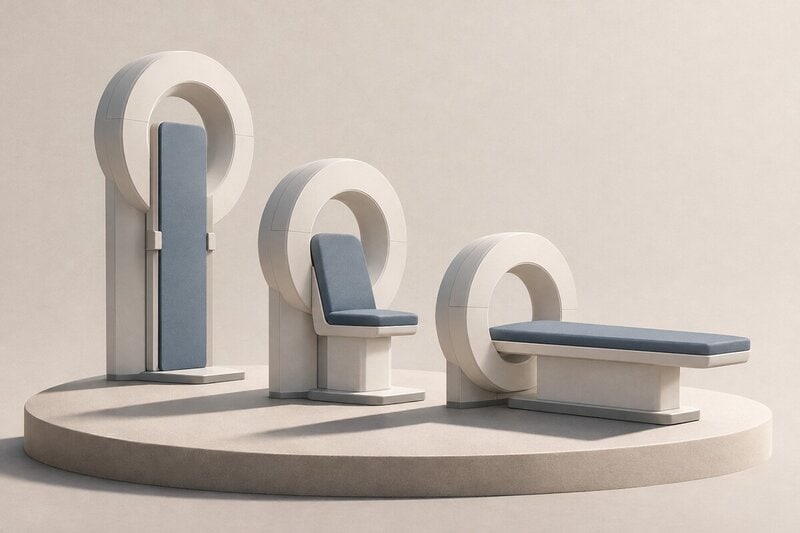
Canon brought a multi-position CT scanner to University Health Network, giving clinicians a way to image patients while they stand, sit or lie down. The system adds upright scanning to the familiar supine setup, capturing anatomy in body positions that better match everyday posture.
Installed in June 2026, the unit is the first of its kind outside Japan, the company says, and has already been used on more than 200 patients. It can switch from one position mode to another in just over a minute, which the company says helps streamline positioning and reduces the time spent preparing each exam.
Canon shows how a CT scanner that moves between standing, seated and lying positions in just over a minute can bring multi-position imaging to University Health Network patients.
Image Credit: AI-generated
What Makes This Trend Stand Out
- Upright Diagnostic Imaging
- Multi-position scanners reveal posture-dependent anatomy that conventional supine imaging can miss, creating room for more precise diagnostics in musculoskeletal, vascular and respiratory care.
- Position-adaptive Care
- Clinical workflows are shifting toward equipment that adapts to patient mobility and real-world body positions, supporting more personalized exams for elderly, injured or mobility-limited patients.
- Functional Anatomy Scanning
- Imaging systems that capture the body under natural load conditions can expand diagnostic insight beyond static scans, opening new pathways for earlier detection and treatment planning.
Sectors Adopting This
- Medical Imaging
- CT manufacturers can differentiate through flexible scanner architectures that combine familiar workflows with new standing and seated imaging capabilities.
- Hospital Care
- Health systems may gain efficiency and diagnostic value from imaging platforms that reduce repositioning time while broadening exam options across patient groups.
- Orthopedic Medicine
- Weight-bearing scans can improve visibility into joint alignment, spinal conditions and structural changes that appear differently when patients are upright.
Featured Reports

Why Fragrance Is Finding Its Way Into Everything

Verified Economy