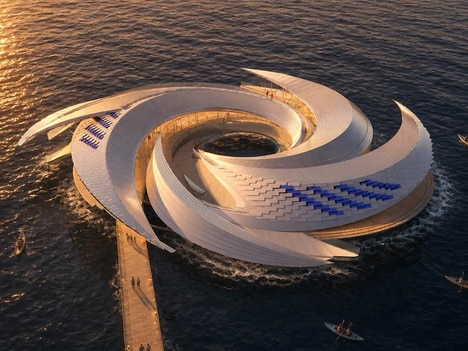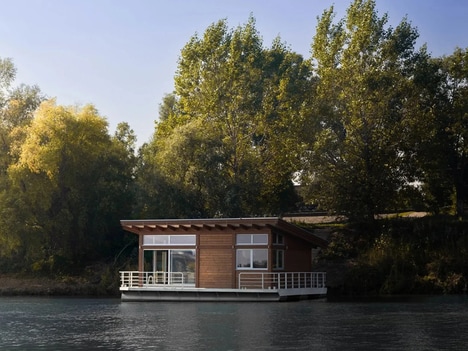
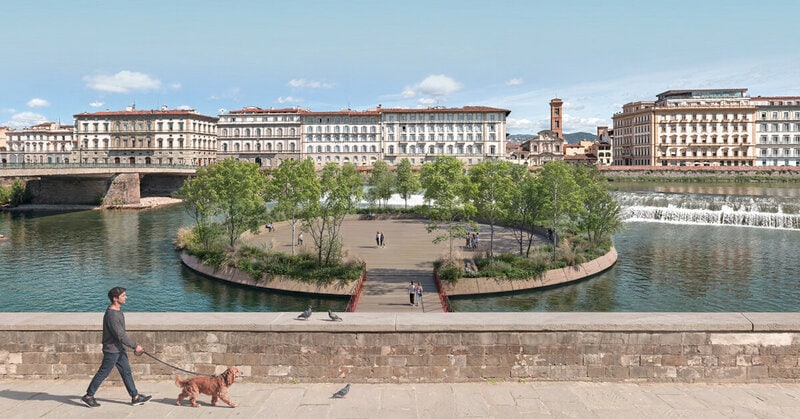
Renna Studio has proposed a floating public space for the Arno River in Florence, called Firenze Little Island. Designed to sit near the Pescaia weir, the removable platform would create a new spot for concerts, markets and outdoor activities during the calmer summer months.
The structure would be built from prefabricated pontoons topped with a timber deck. At its centre, a circular planter wall would hold 39 mature trees, providing shade and helping direct airflow across the space. Underwater cables would keep the island in place as river levels change.
The design is intended to be taken apart and stored when the season ends, rather than becoming a permanent riverside structure. This would allow Florence to make more use of its riverfront while keeping the historic waterfront accessible.
Image Credit: Renna Studio – Angelo Renna, designboom, designboom
What's Driving This Trend
- Seasonal Floating Parks
- Temporary river-based public spaces create flexible urban amenities that expand cultural programming without requiring permanent waterfront construction.
- Prefabricated Civic Platforms
- Modular pontoons and timber decking suggest scalable infrastructure models for rapid deployment of markets, concerts and recreation in underused waterways.
- Tree-centered Microclimates
- Integrated mature planting on floating decks introduces shade, airflow management and nature-based comfort systems into dense historic city environments.
Who This Affects Most
- Urban Planning
- Removable waterfront installations offer municipalities new ways to activate heritage districts while preserving access, sightlines and regulatory flexibility.
- Landscape Architecture
- Floating landscapes with engineered planters expand the role of public greenery into rivers, canals and other constrained urban sites.
- Event Infrastructure
- Seasonal aquatic venues create adaptable settings for cultural gatherings, outdoor commerce and leisure experiences tied to changing weather patterns.