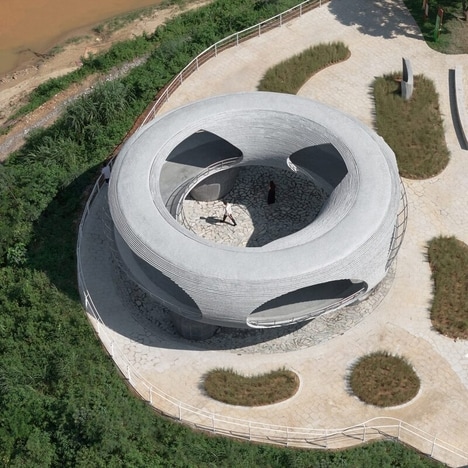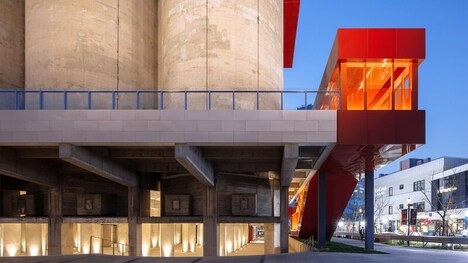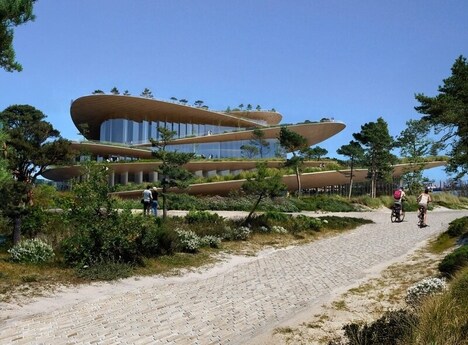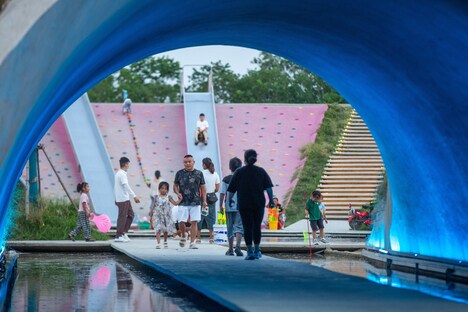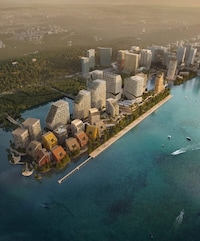
'City on the Loop' is a visionary architectural strategy conceived by designers Ruxuan Zheng and Haoyuan Wang that reimagines Brooklyn's Canarsie Pier as a phased, flood-adaptive urban loop designed to evolve with projected sea-level rise through 2500. As part of this concept, the designers envision the transformation of the former dividing barrier of the Belt Parkway into an elevated housing and transit spine that grows vertically over time with green roofs, terraces, and walkways. Wetland buffers and public platforms are also integrated to allow natural and urban systems to coexist.
The speculative 'City on the Loop' project unfolds in three phases, beginning with the retrofit of the parkway into a new housing and transit corridor. This is followed by the addition of light rail and water-based transit. The third phase culminates in a hotel and commercial district that activates the waterfront while promoting awareness of long-term coastal sustainability.
Image Credit: Ruxuan Zheng, Haoyuan Wang
What's Driving This Trend
- Phased Flood-adaptive Urbanism
- A model where long-horizon, phased planning for sea-level rise enables incremental urban densification and infrastructure evolution along vulnerable coastlines.
- Elevated Transit-housing Spine
- The integration of stacked housing and transit along a raised spine redefines land-use efficiency and multimodal connectivity within narrow urban corridors.
- Hybrid Wetland-urban Systems
- Combining wetlands, public platforms, and green roofs produces multifunctional ecologies that absorb floodwaters while supporting recreation and commerce.
Who This Affects Most
- Coastal Real Estate Development
- Long-term coastal real estate is reshaped by assets designed to evolve vertically and incorporate transit, affecting valuation, financing, and insurance frameworks.
- Public Transit and Mobility
- Transit systems that blend light rail with water-based modes within phased rollouts prompt new operational models and integrated infrastructure planning.
- Green Infrastructure and Landscape Architecture
- Landscape and green infrastructure practices shift toward engineered wetlands, rooftop ecologies, and multifunctional public spaces that combine ecological service with economic use.