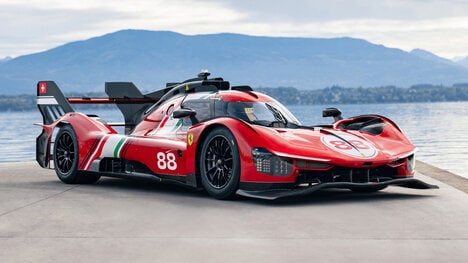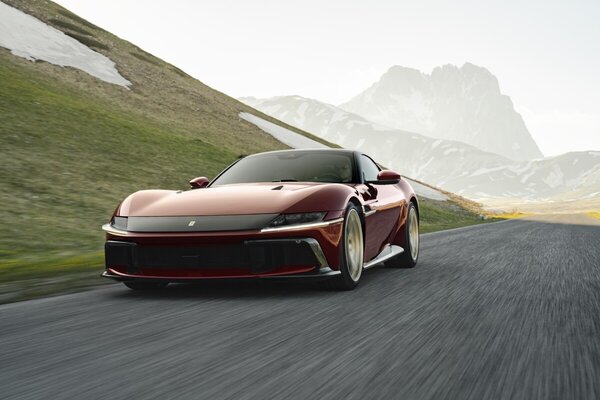
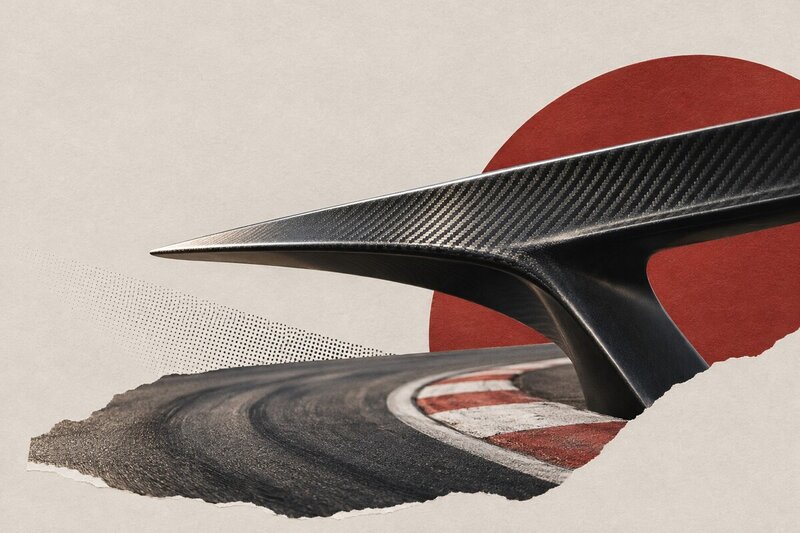
Ferrari revived the Challenge Stradale name with a street-legal coupe that removes the plug-in hybrid system, making the '296 Challenge Stradale' the first road-going 296 to run solely on its twin-turbo V6. It borrows from the '296 Challenge Evo' racer, using lighter construction, additional aero, and chassis changes for drivers chasing lap times over peak output.
A fixed rear wing and sealed floor help it generate 617 kg of downforce at 250 kph, and Ferrari says its Fiorano lap beats both the 296 GTB and 296 Speciale. The related 296 Challenge Evo is set to enter Ferrari Challenge racing in Europe and North America in 2027.
Ferrari shows how removing the hybrid system can turn the 296 platform into a lighter, aero-focused, road-legal track special with 617 kg of downforce.
Image Credit: AI-generated
What Makes This Trend Stand Out
- Hybrid-free Performance
- Electrification rollback in niche supercars creates white space for lighter, purist driving machines built around weight reduction and mechanical engagement.
- Road-legal Race Tech
- Track-derived aerodynamics and chassis tuning are increasingly migrating into street vehicles, opening room for premium models that blend compliance with competition-grade capability.
- Lap-time Luxury
- Performance prestige is shifting toward measurable circuit results, giving brands new ways to differentiate through downforce, handling, and track validation rather than horsepower alone.
Sectors Adopting This
- Luxury Automotive
- Ultra-premium automakers can use limited-run, motorsport-inspired variants to reinforce brand heritage while targeting collectors and enthusiast drivers.
- Motorsport Engineering
- Race-series development pipelines are becoming valuable incubators for road-car innovation in aerodynamics, materials, cooling, and suspension systems.
- Performance Aftermarket
- Demand for track-focused upgrades suggests growth potential for specialized components that improve downforce, reduce mass, and sharpen handling for high-end vehicles.