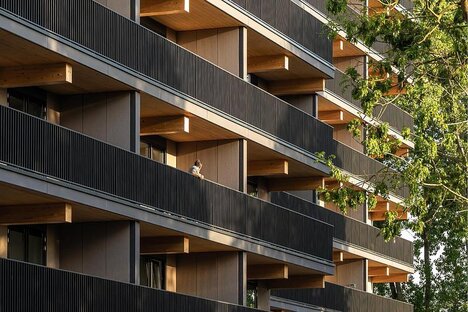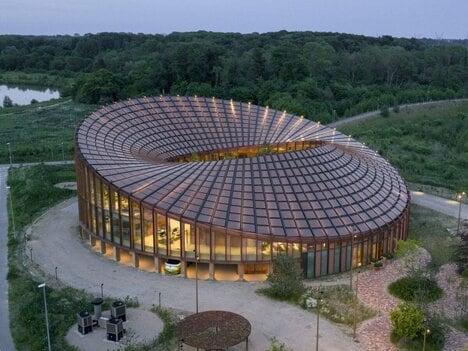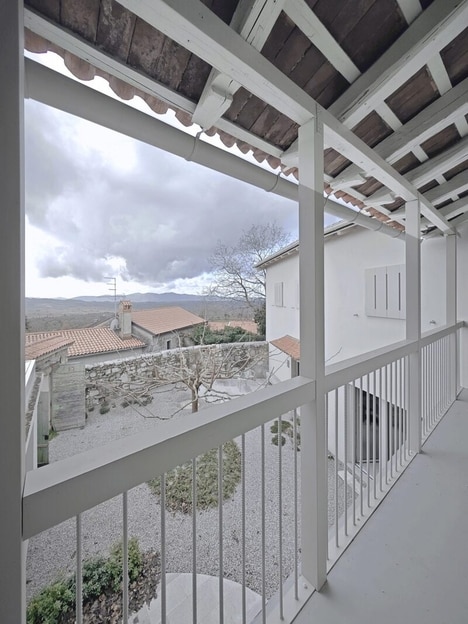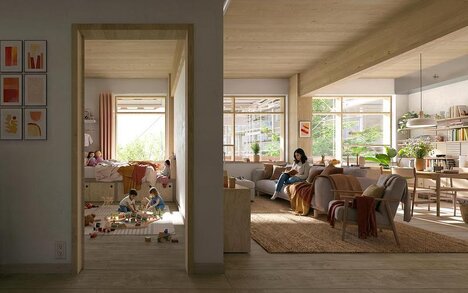
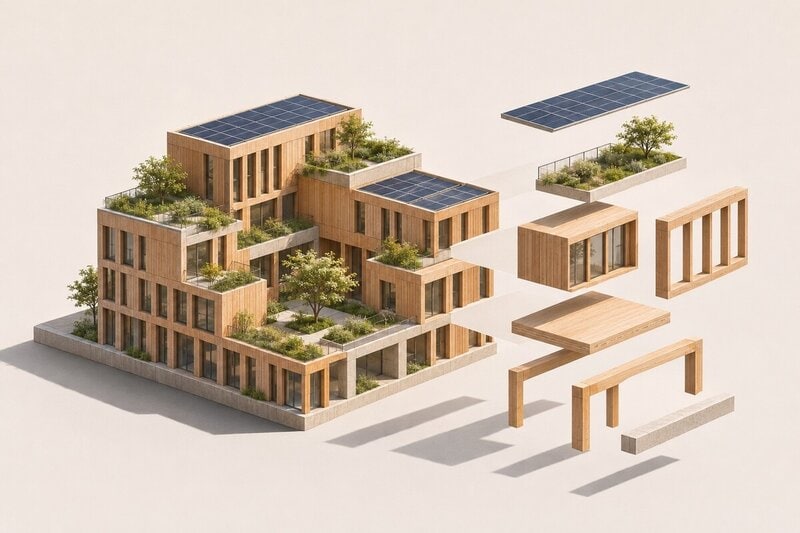
Bjarke Ingels Group has unveiled plans for a 13,000-square-metre timber development in Thun, Switzerland. The project will bring four buildings containing hotel rooms and apartments to the entrance of the Siegenthalergut district, with stepped designs, generous terraces and balconies overlooking the Bernese Alps.
One corner building will combine three-star and four-star hotels within a single stepped structure, with shared amenities and a rooftop restaurant. The residential buildings will look onto a landscaped courtyard, while the wider development will include 1,800 square metres of solar panels, green roofs and rainwater systems.
Timber components are also designed for later disassembly and reuse, allowing parts of the buildings to be recovered or replaced as needs change. Construction is scheduled to begin in 2028.
Image Credit: AI-generated
What's Driving This Trend
- Disassemblable Timber Architecture
- Modular wood components designed for future recovery create new value streams around circular construction, adaptive reuse, and lower-carbon building lifecycles.
- Alpine Mixed-use Hospitality
- Hybrid hotel-and-residential districts in scenic destinations reveal demand for integrated travel, living, dining, and wellness experiences within compact sustainable developments.
- Climate-responsive Building Systems
- Solar panels, green roofs, and rainwater infrastructure embedded into premium real estate signal growing potential for buildings that operate as localized sustainability platforms.
Who This Affects Most
- Sustainable Construction
- Mass timber and reusable building assemblies are reshaping construction economics by linking carbon reduction, material traceability, and long-term asset flexibility.
- Hospitality Real Estate
- Blended three-star and four-star hotel concepts with shared amenities point to more efficient property models serving varied guest segments in one destination.
- Urban Development
- District-scale planning that combines housing, hotels, courtyards, and renewable infrastructure highlights opportunities for livable neighborhoods built around resilience and resource efficiency.