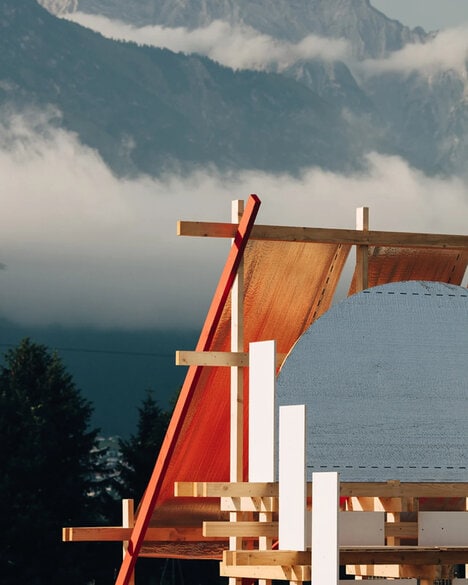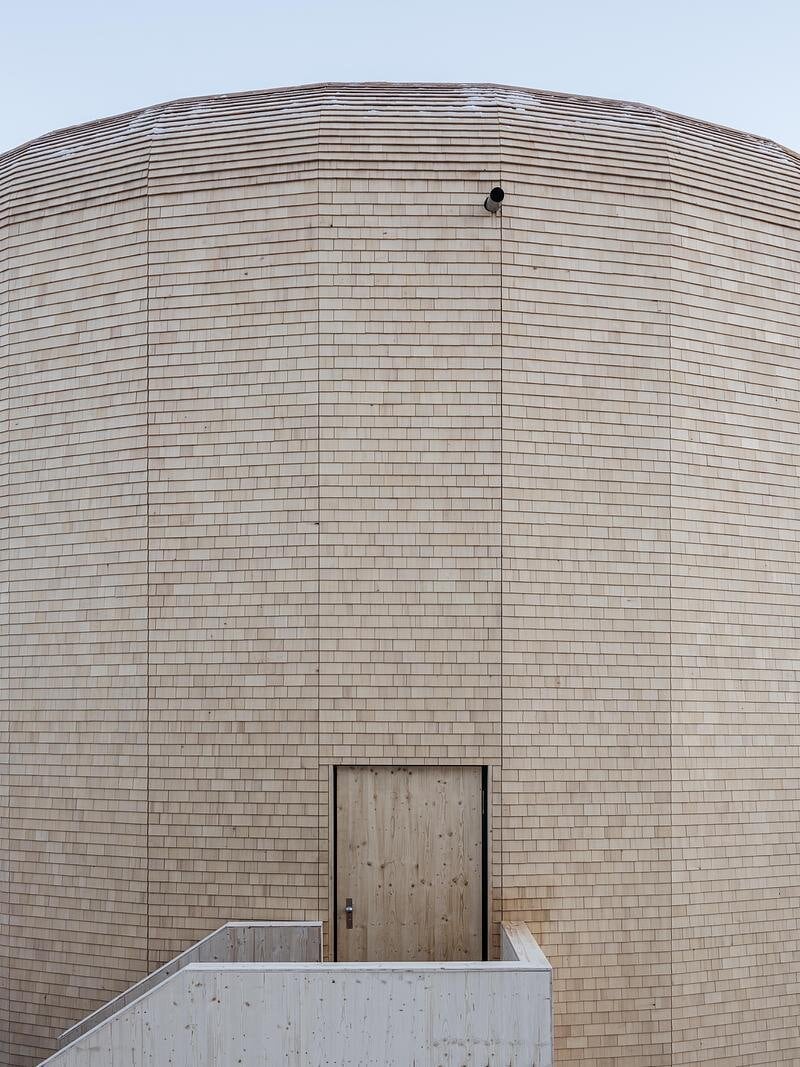
SKREINSTUDIOS, in collaboration with Hub Culture and BYLD, has designed THE ICON — a pioneering timber pavilion in Davos, Switzerland. The design has been named a Popular Choice Winner in the Pop-Ups and Temporary category at the Architizer A+Awards 2026, a distinction decided by a worldwide public vote within one of the largest and most widely followed architecture award programs globally.
SKREINSTUDIOS' timber pavilion project covers approximately 180 square meters across two levels and is divided into easily transportable modular units, with every component meticulously designed with functionality, circularity, and sustainability at its core. The entire building envelope — including floor, roof, and wall assemblies — has been fully insulated to minimize operational energy demand even though thermal insulation is not required by building regulations for temporary structures, while the interior is naturally ventilated without mechanical ventilation systems, further reducing energy consumption and providing a healthy indoor environment.
Image Credit: Beat Bühler Fotografie
What's Driving This Trend
- Circular Timber Architecture
- Modular wood structures with reusable components create new pathways for low-waste buildings that can shift between temporary and permanent use cases.
- Insulated Temporary Spaces
- High-performance envelopes in pop-up structures signal a shift toward energy-efficient event, retail, and hospitality formats that exceed baseline building requirements.
- Passive Pavilion Design
- Natural ventilation and reduced mechanical systems highlight how healthier indoor environments can be delivered through simpler, lower-energy architectural strategies.
Who This Affects Most
- Sustainable Construction
- Circular material systems and transportable modules expand the market for buildings designed around disassembly, reuse, and reduced carbon impact.
- Event Architecture
- Award-winning temporary pavilions demonstrate demand for premium branded environments that combine mobility, comfort, and sustainability.
- Green Building Materials
- Engineered timber and insulated assemblies are positioned to replace more carbon-intensive materials in adaptable commercial and public structures.