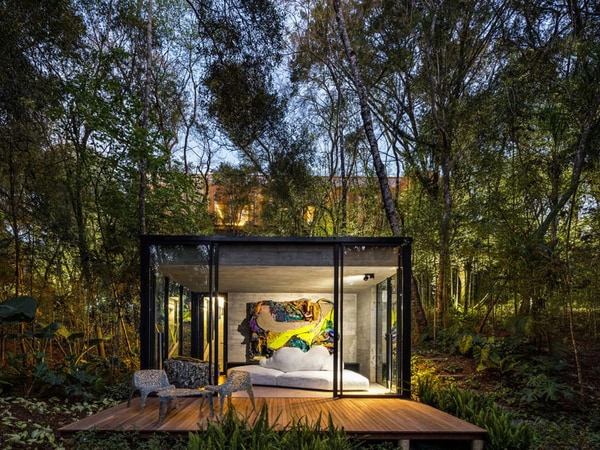
Carlo Ratti Associati’s self-sufficient bivouac for the 2026 Winter Olympics was created in collaboration with Salone del Mobile.Milano to function first as an urban pavilion and later as a remote mountain refuge. Its angular structure draws inspiration from 3D scans of Alpine rock formations, translating natural geometry into architectural form. Built with cross-laminated timber, aerogel insulation, and metal framing, the shelter achieves both structural integrity and minimal environmental impact while echoing the surrounding landscape.
The bivouac operates entirely off-grid through a photovoltaic system, energy storage, and a condensation mechanism that collects drinking water from the air. When relocated to the mountains, it will blend seamlessly with its environment yet remain visible through a red signal light during storms. The project reflects a vision of design as adaptive, efficient, and symbiotic with nature—demonstrating how architecture can serve endurance and ecology simultaneously.
Image Credit: Carlo Ratti Associati
What Makes This Trend Stand Out
- Self-sufficient Architecture
- The emergence of self-sufficient architectural designs emphasizes the need for structures that operate independently from external utilities, revolutionizing how built environments interact with natural resources.
- Nature-inspired Design
- Drawing inspiration from natural forms like Alpine rock formations, designers are pushing the boundaries of architecture to create structures that harmonize with their geographical context.
- Off-grid Infrastructure
- The development of off-grid infrastructure, utilizing sustainable energy and water collection systems, is paving the way for buildings to become more environmentally resilient and resource-efficient.
Sectors Adopting This
- Sustainable Construction
- Innovations in sustainable construction materials, such as cross-laminated timber and aerogel insulation, are transforming industry standards for reducing environmental footprints.
- Renewable Energy Solutions
- The role of renewable energy solutions in architecture is expanding, providing opportunities to harness solar power and other resources for autonomous building operations.
- Smart Water Management
- Advances in smart water management technologies, exemplified by air-derived condensation systems, are crucial for ensuring resource availability in remote or off-grid locations.