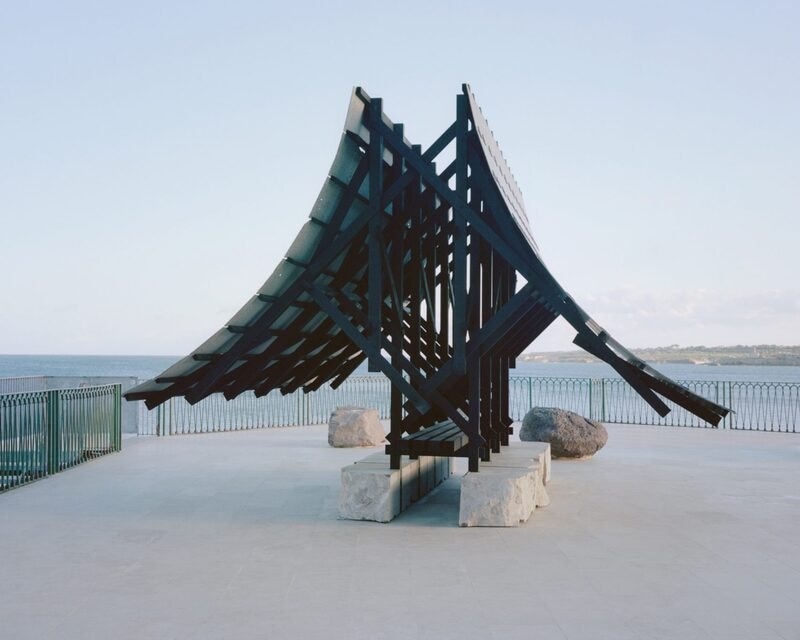
Asympta by Leopold Banchini Architects is a temporary micro-architecture installed in Sicily that reimagines early human habitation through a shelter rooted in local material traditions and landscape logic. Located in the Pantalica region of eastern Sicily, a UNESCO World Heritage area known for prehistoric tombs, the project shifts focus away from burial architecture toward a conceptual dwelling that reflects on how ancient communities might have built lightweight structures.
The installation is constructed from materials sourced within the surrounding environment, including lava stone from Mount Etna, fire-treated local wood, Pietra Pece limestone, bronze, and sheep wool felt. These elements are combined to create a shaded gathering space that responds to climate and topography while engaging with craft and geological history. Asympta’s form echoes natural features of the site, such as volcanic cones and excavated stone quarries.
Image Credit: Simone Bossi
Why This Trend Is Growing
- Geo-sourced Micro-architecture
- Designs that prioritize locally quarried stone and region-specific minerals create opportunities for low-transport, site-specific shelters that recalibrate sourcing and fabrication workflows.
- Material-ancestry Revival
- This movement reintegrates traditional materials like wool felt and fire-treated timber into contemporary builds, opening pathways for hybrid craft-industrial production models.
- Topography-responsive Design
- By aligning forms with volcanic cones and quarry scars, architecture that reads and adapts to landscape contours enables adaptive systems that reduce mechanical intervention and energy loads.
Industries Being Reshaped
- Temporary Events and Installations
- Pop-up architecture leveraging local geology and craft techniques can transform event staging into immersive, place-specific experiences with lower material footprints.
- Sustainable Construction Materials
- Supply chains centered on regional stones, treated timber, and natural felts suggest new product lines that lower embodied carbon and valorize local resource economies.
- Cultural Heritage Tourism
- Heritage destinations that integrate speculative shelters and interpretive micro-architecture can deepen visitor engagement through tactile, geologically rooted narratives.